Posté par Olivier Bonfait, le 15 octobre 2024;
- Date limite : 12 nov. 2024
The Research and Academic Program (RAP) at the Clark Art Institute is pleased to invite papers from graduate students for a one-day symposium, “Queer Palimpsests: Rewriting Medieval Art History” on April 11th, to be held in person at the Clark in Williamstown, Massachusetts. In the Middle Ages, palimpsests were parchments whose original text or imagery was effaced in order to reuse their valuable substrate. A transliteration of the Greek word παλίμψηστος (palimpsestos), palimpsest literally means “scraped again,” denoting the process of scraping or rubbing a piece of parchment. Sometimes this repurposing was achieved hastily, leaving behind traces of the original text or image. Beyond its literal meaning, today the term has gained other metaphorical resonances. Collapsing iterations of writing and/or image on the same page, palimpsests evoke questions . . . → En lire plus
Posté par jcerman, le 13 octobre 2024;
- date limite des propositions : 24 novembre 2024
Appel à communications : « Violence et destruction » (Doctoriales de la SERD)
Les Doctoriales de la Société des Études Romantiques et Dix-neuviémistes (SERD) sont ouvertes à tous les doctorants et jeunes docteurs dont les recherches portent sur le XIXe siècle, en France et à l’étranger. En collaboration étroite avec les activités de la SERD, les Doctoriales de la SERD participent à l’organisation de l’Atelier du XIXe siècle. Les Doctoriales de la SERD mènent également un projet de recherche indépendant, qui donne lieu à des publications en ligne ainsi qu’à l’organisation d’un colloque. Pour s’inscrire sur la liste de diffusion : co**********************@***il.com
Le séminaire a pour vocation de donner la parole aux jeunes chercheurs et chercheuses. Le séminaire est organisé autour d’un thème choisi pour deux ans mais porte également . . . → En lire plus
Posté par Olivier Bonfait, le 6 octobre 2024;
 Émilie Chedeville, Un Sacro Monte à Paris. Le Calvaire du Mont-Valérien au XVIIe siècle, Paris, 2024.
éd. 1 : 1, coll. ars, 114 p., 32 ill. ISBN: 979-10-97193-09-6 20 euros.
Pour se procurer l’ouvrage sur le site de l’éditeur : https://editions1sur1.wordpress.com/home/
La tradition des montagnes saintes, théâtres de grands événements qui en font des lieux hautement symboliques incarnant dans une efficace topographique un poids historique, est renouvelée au Mont-Valérien au début du XVIIe siècle grâce à un effort de narration, de figuration de l’histoire, ici déterminante pour le salut du genre humain, puisqu’il s’agit de la . . . → En lire plus
Posté par Olivier Bonfait, le 2 octobre 2024;
- Date limite : 23 octobre 2024

Auteur inconnu. ARC, 1969: «Dewasne commence la Longue Marche…». Illustration de la série d’articles de Yann Pavie, «Vers le musée du futur», Opus International n°28, novembre 1971.
L’Université Rennes 2 organise le mardi 8 avril 2025 une journée d’étude intitulée « Critique d’art et musée : dynamiques et enjeux d’une relation au XXe siècle ». Cet évènement aura lieu en présentiel et pourra être suivi par visioconférence.
Présentation de la journée d’étude Le 18 mai 1968, à Paris, un groupe de critiques d’art manifestant se rassemble aux abords de l’avenue du Président Wilson, portant l’ambition d’occuper le Musée National d’Art Moderne. . . . → En lire plus
Posté par Damien Delille, le 30 septembre 2024;
- date limite des propositions : 17 février 2025
 Appel à publication : Revue Théia – Appel à Varia et Notes et Documents
Théia. Revue d’histoire et d’histoire de l’art(english version below)
Theia. Revue d’histoire et histoire de l’art est une jeune revue scientifique en Open Access consacrée à la recherche en histoire et en histoire de l’art des périodes modernes et contemporaines (XVe s.-XXIe s.). Les interactions entre histoire et histoire de l’art, par le biais notamment des cultures visuelles et matérielles, forment un des socles importants de la revue. Les articles sont publiés dans l’une des cinq langues suivantes : français, anglais, espagnol, italien, allemand.Le 2e numéro thématique à l’automne 2025, coordonné par Damien Delille et . . . → En lire plus
Posté par Olivier Bonfait, le 30 septembre 2024;
- Date limite : 15 octobre 2024
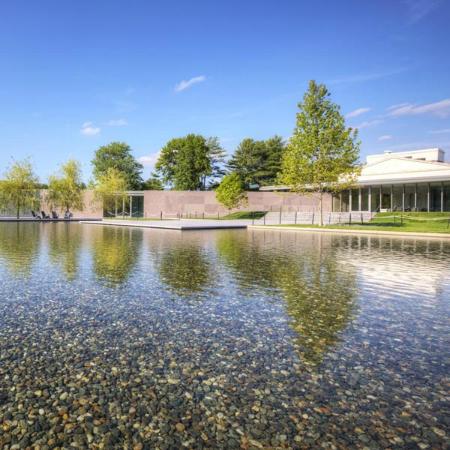
 The Clark Art Institute’s Research and Academic Program (RAP) awards funded residential fellowships to established and promising scholars with the aim of fostering a critical commitment to inquiry in the theory, history, and interpretation of art and visual culture.
As part of our commitment to fostering diverse engagements with the visual arts, RAP particularly seeks to elevate constituencies, subjects, and methods that have historically been underrepresented in the discipline.
In addition to the general Clark Fellowships, which are open to any topic, time period, and geographic focus, RAP offers a number of special fellowships for specific research interests that are intended to nurture a . . . → En lire plus
Posté par Olivier Bonfait, le 30 septembre 2024;
- Date limite : 15 octobre, 1er nov. 15 nov. 2024
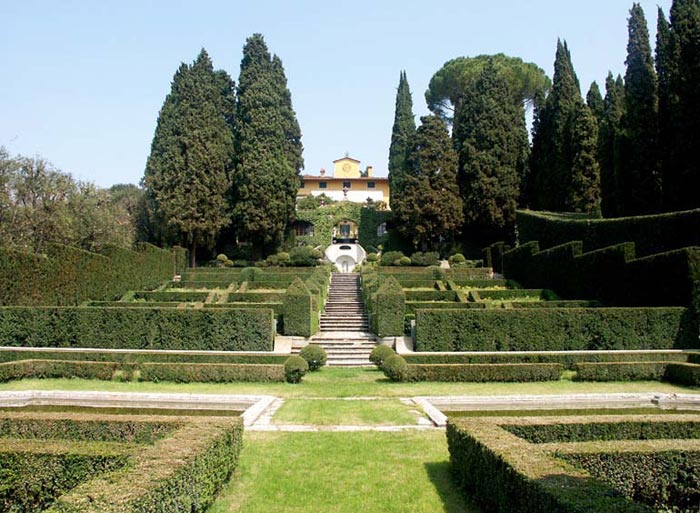
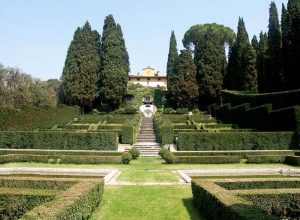 Tatti, The Harvard University Center for Italian Renaissance Studies in Florence, Italy, warmly invites applications for the 2025–2026 academic year. We offer the following ten fellowships (n.b. deadlines vary):
I Tatti Fellowship (twelve months; deadline: October 15) for post-doctoral research in any aspect of the Italian Renaissance, broadly understood historically to include the period from the 14th to the 17th century and geographically to include transnational dialogues between Italy and other cultures (e.g. Latin American, Mediterranean, African, Asian etc.).
Wallace Fellowship (four or six months; deadline November 15) for scholars who explore the historiography and impact of the Italian Renaissance in the Modern Era . . . → En lire plus
Posté par Olivier Bonfait, le 30 septembre 2024;
- Date limite : 15 octobre 2024
Call for Papers for a special issue of H-France Salon: The Myth of French Taste edited by Oliver Wunsch (wu*****@**.edu).
The French have taste in all they do Which we are quite without ; For Nature which to them gave goût To us gave only gout.
–Thomas Erskine (1750–1823)
The concept of « goût français » first became a subject of sustained critical inquiry during the eighteenth century, integrating the discourse of aesthetic experience with new forms of national identity. Enlightenment theories of the nation as something both perfectible and corruptible gave rise to the idea of French taste as something requiring both cultivation and protection. Usage of the term « le goût français » grew gradually through the early twentieth century, peaking during the . . . → En lire plus
Posté par Olivier Bonfait, le 27 septembre 2024;
 Frédéric Cousinié, L’espace imaginal : méditer dans l’image au XVIIe siècle, Paris, 2024
éd. 1 : 1, coll. ars, 216 p., 52 ill. ISBN : 979-10-97193-10-2 24 euros.
Pour se procurer l’ouvrage sur le site de l’éditeur : https://editions1sur1.wordpress.com/home/ Avant d’être admirés dans les musées, les tableaux religieux étaient appréciés au sein des espaces sacrés qui les accueillaient : églises, chapelles et oratoires où ils pouvaient constituer, entre autres usages, des supports de méditation et de contemplation. Méditer au moyen d’une image, pratiquer ce qui était désigné comme l’oraison (orare : prier), obligeait alors à associer une . . . → En lire plus
Posté par Olivier Bonfait, le 19 septembre 2024;
- Date et lieu de la journée d'études : 14 novembre 2024, Université de Rouen Normandie – GrHis (Groupe de recherche en Histoire, Salle du Conseil (bât. B).
 Faire image au XVIIe siècle. Modèles et perspective
Journée d’études, 14 novembre 2024
Université de Rouen Normandie – GrHis (Groupe de recherche en Histoire, Salle du Conseil (bât. B).
Argument.
L’art, nécessairement au cœur de l’histoire de l’art, a subi une transformation majeure au XXe siècle avec la dissolution des unités rassurantes mais éphémères que furent les « arts du dessin » ou les « Beaux-Arts ». Cette évolution a précipité le passage vers une histoire ouverte et déhiérarchisée des objets artistiques, englobant une réflexion sur l’image, le visuel, les figures et les signes, la culture matérielle, voire l’ensemble . . . → En lire plus
Posté par Olivier Bonfait, le 6 septembre 2024;
- Date et lieu de la journée d'études : 13 septembre, INHA; 14 septembre ENS., 13 septembre, INHA; 14 septembre ENS.
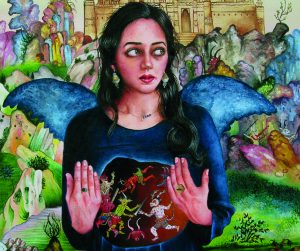
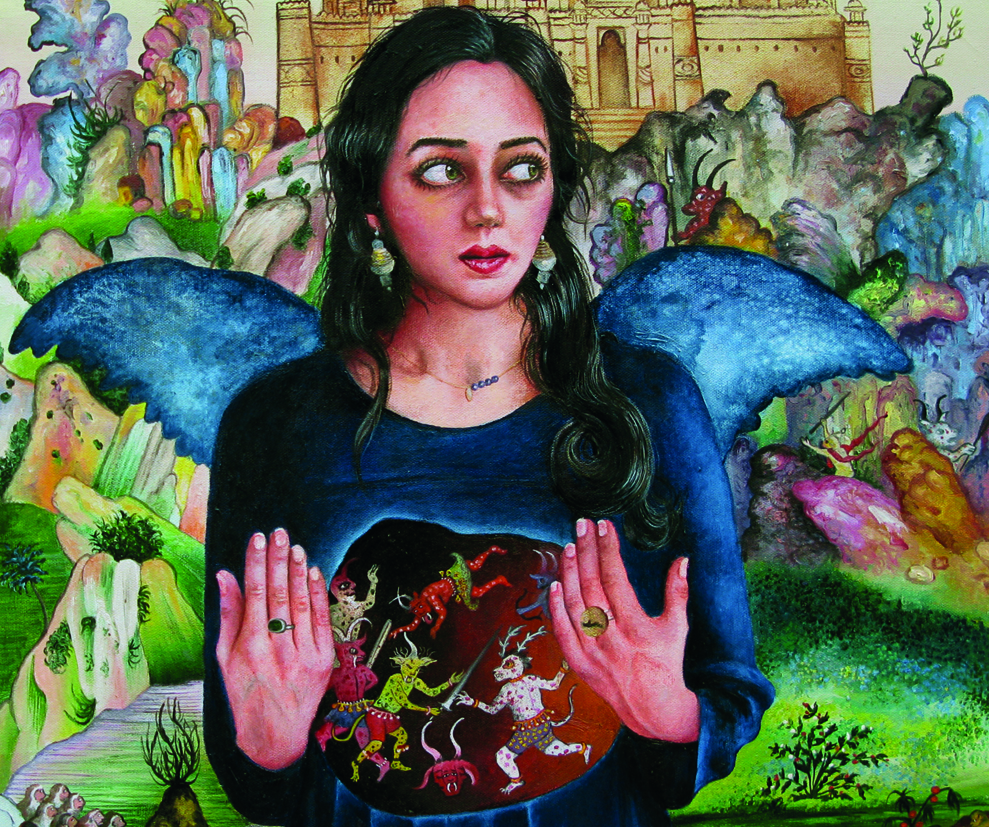
© Nazanin Pouyandeh, La légende oubliée (détail), 2012, huile sur toile, 65 x 54cm.
DANS L’INTIMITÉ DES ŒUVRES, AVEC NADEIJE LANEYRIE-DAGEN
Vendredi 13 septembre 9h30-18h à l’INHA Samedi 14 septembre 10h-18h à l’ENS
Ces deux journées sont organisées autour de Nadeije Laneyrie-Dagen, professeure en Histoire de l’art et directrice du Département Arts de l’ENS jusqu’en juin 2024. La première donnera la parole à des historiennes et historiens de l’art aux parcours divers, ayant . . . → En lire plus
Posté par Olivier Bonfait, le 2 juillet 2024;
- Date limite : 11 aout 2024
 Two NOMIS Postdoctoral Fellowships 2025-26, Basel
eikones – Center for the Theory and History of the Image at the University of Basel (CH), Sep 1, 2025–Aug 31, 2026 Application deadline: Aug 11, 2024
eikones – Center for the Theory and History of the Image at the University of Basel.
Call for Applications: Two NOMIS Fellowships (100%)
The center invites applications from outstanding junior and senior researchers in the humanities, social sciences, and natural sciences for two one-year NOMIS Fellowships beginning September 1, 2025.
Since 2005, eikones has served as a center for graduate and postgraduate research on images. The center is dedicated to the . . . → En lire plus
Posté par Olivier Bonfait, le 16 juin 2024;
- Date de la présentation : 26 mai, CIHA, Lyon, Centre des congrès, Auditorium Lumière.
Rappel : tous les événements du 36e Congrès du CIHA, Lyon, 23-28 juin sur openagenda ici.
et venez nombreux assister à la présentation du premier volume publié par le CFHA
HistoireS de l’art en France. 1964-2024. Lieux, questions, défis
À l’occasion du 36e Congrès international d’histoire de l’art, le Comité français d’histoire de l’art publie HistoireS de l’art en France, 1964-2024. Lieux, questions, défis. L’ouvrage retrace les étapes importantes qui ont marqué l’histoire de l’art en France durant les soixante dernières années, qui ont vu s’opérer tant de bouleversements, et insiste sur la diversité de . . . → En lire plus
Posté par Olivier Bonfait, le 15 juin 2024;
- Date limite : 5 juillet 2024
Association for Art History Conference 25: Call for Sessions (York, 9-11 Apr 25)
University of York, Apr 9–11, 2025 Deadline: Jul 5, 2024
The Association for Art History’s Annual Conference brings together international research and critical debate about art history and visual culture. A key annual event, the conference is an opportunity to keep up to date with new research, hear leading keynotes, broaden networks and exchange ideas.
The Annual Conference attracts around 400 attendees each year and is popular with academics, curators, practitioners, PhD students, early career researchers and anyone engaged with art history research. Members of the Association get reduced conference rates, but non-members are welcome to attend and propose sessions and papers. Convenors are limited to convening one session.
We actively encourage applications from . . . → En lire plus
Posté par Olivier Bonfait, le 31 mai 2024;
 International Congress: « Baroque Times: The table’s scenography ».
Call for Papers: When discussing the table or the act of being at the table, our immediate thoughts go to the act of eating, the company present, and the food to be shared. However, the table transcends its practical function to become a richly layered symbol, both materially and conceptually, embodying sociability in myriad ways throughout history.
During the modern era (17th-18th centuries), the table’s significance unfolded across diverse contexts and environments, from the opulent settings of palaces to the humble abodes of common citizens. Regardless of setting, the table served as a focal point, drawing together a spectrum of personalities and activities, thus assuming . . . → En lire plus
Posté par Le Centre allemand d'histoire de l'art de Paris, le 22 mai 2024;

X-ray-image (2002) of Antonio Begarelli’s angel sculpture (after 1534)
Sigrid Weigel – Imaging the A-Visible. Towards a Grammatological Theory of Images
Sigrid Weigel’s lecture explains her contribution to the recent debate on Bildwissenschaft. Departing from Derrida’s precept “The trace must be thought before the existing” her focus is on the threshold between traces and iconic images, between something immaterial and its pictorial re/presentation, – in this way referring to Walter Benjamin’s threshold knowledge (Schwellenkunde). Instead of asking for the history, the power, or essence of images, her grammatological theory addresses the question of imaging (Bildgebung) as such and the afterlife of the vera-icon-problem in the present quest for true images. It investigates . . . → En lire plus
Posté par Roxanne Loos, le 15 mai 2024;
- Date limite : 15 juin 2024
 Journées d’études organisées par l’UNamur, l’UCLouvain et le Musée L (5-6 décembre 2024)Appel à communications (15 juin 2024)
ARGUMENTAIRE
Deux cents ans après la parution de l’ouvrage qui a fixé le genre de la monographie, le Über Hubert und Johan van Eyck de G. F. Waagen (1822), cent cinquante ans après la parution du Zeitschrift für bildende Kunst (1874) de Morelli, suivi près de vingt ans plus tard par les Stifragen (1893) de Riegl et enfin par les Principes fondamentaux en histoire de l’art (1917) de Wölfflin, ces journées se donnent pour objectif d’interroger l’actualité du formalisme et l’avenir de . . . → En lire plus
Posté par Olivier Bonfait, le 15 mai 2024;
- Date limite : 3 juin 2024
 The Institut Giacometti in Paris runs a research programme on the history of modern art: the École des Modernités. The aim of this programme is to support original projects in the study of the art of the modern period (1905-1960).
As part of this programme, the Institut Giacometti supports original research on the modern period through access to its research centre, research residencies and publishing support in the form of a collection of essays. One of the main themes of the programme is cosmopolitan modernity in Paris.
The École des Modernités’ collection of monographs, jointly published with Fage Éditions, offers unpublished texts which are the results . . . → En lire plus
Posté par Olivier Bonfait, le 15 mai 2024;
Form, Style, Principles: Art Historical and Theoretical Reflections – A Conference of the Wölfflin Edition, University of Zurich
Scientific Organization: The team of the Wölfflin edition project, https://www.woelfflin.uzh.ch/de.html
Recent discussions in aesthetics and art history, literature, and visual studies have seen a renewed interest in questions of form and formalism. Whether in connection with algorithmic thinking, computer vision, and artificial intelligence, or with transcultural comparisons, revised narratives of modernism, re-conceptualisations of formlessness, and cognitive reflections on connoisseurship, form and formalism have regained currency in current discourses on a transhistorical and transdisciplinary level. It has become clear that an “archaeology of knowledge” about these crucial notions is indispensable in teasing out their critical potential and in productive application of what has also been termed “new formalism” or “post-formalism”.
. . . → En lire plus
Posté par Olivier Bonfait, le 2 mai 2024;
- Date limite : 3 juin 2024
Workshopping Future Directions in Impressionism 5-6 (in-person) & 9 (online) September 2024 Institute of Advanced Studies, University College London
Apply online | questions to im******************@***il.com
What is impressionism now? Who counts as impressionist? Who decides the future of impressionism? ‘Workshopping Future Directions in Impressionism’ (5-6 September 2024, Institute of Advanced Studies, University College London (IAS, UCL) & 9 September 2024 (online)) creates space for the subfield to look collectively and work collaboratively. As the first in what is intended to be a series of events in 2024 and beyond, ‘Workshopping Future Directions in Impressionism’ promises to be that: a workshop. We welcome . . . → En lire plus
|
Équipe Rédacteur en chef : Olivier Bonfait.
Rédacteurs : Elliot Adam (Moyen Age) ; Nicolas Ballet (XX-XXIe siècles) ; Matthieu Fantoni (musées) ; Antonella Fenech Kroke (bourses) ; Vladimir Nestorov (Lettre mensuelle)
Administrateur web : Matthieu Lett.
ancien éditeur : Pascale Dubus
anciens rédacteurs : Gautier Anceau, Sébastien Bontemps, Damien Bril ; Sébastien Chauffour ; Ludovic Jouvet ; Aude Prigot
|
 Les commentaires sont clos
 Appels à communication
 Cultural Studies, Moyen-Âge, Théorie et interprétation