Posté par Damien Bril, le 19 mars 2013;
- Date limite : 30 avril 2013
Home: Departure and Destination A Graduate Symposium
 Presented by the Graduate Group in Classics, Archaeology, and History of Art
In honor of Barbara Miller Lane, Andrew W. Mellon Professor Emeritus of Humanities and Professor Emeritus of History
October 4-5, 2013, Bryn Mawr College, Bryn Mawr, PA
Keynote speaker and respondent: Kostis Kourelis, Assistant Professor of Art History, Franklin & Marshall College
What makes a home, and who defines it? The home has a material presence and a place in the mind. It provides a locus of identity formation, negotiation, and display. Home stands as a site for social negotiation as well: who stays, who leaves, and why? What is at . . . → En lire plus
Posté par Damien Bril, le 19 mars 2013;
- Date limite : 15 avril 2013
Munich / Germany / Technische Universität München, March 18 – April 17, 2013 Application deadline: 15 avr. 2013
 TUM is the first university in Germany to reinforce its recruitment policy by a comprehensive tenure track system. The TUM Department of Architecture invites applications for a Tenure Track Assistant Professorship »Theory of Architecture and Society«, initially pay-scale grade W2, to be filled as soon as possible.
We are seeking qualified applicants, who demonstrate a strong research agenda in the fields of theory of architecture and urbanism within the twentieth century society. The successful candidate will be expected to engage in the intellectual conceptualization of contemporary concerns that architecture and urbanism face in . . . → En lire plus
Posté par Damien Bril, le 18 mars 2013;
- Date limite : 30 avril 2013
Thresholds 42: « Human » prompts us to consider the past and present changing notion of ‘the human’ with regards to its physical, virtual, and psychological habitat.
 In the last decade innovations within cognitive imaging, computer interfaces, communication technologies, surrogate natures, sensory mediators, and global tracking have reshaped our understanding of the Self. This shift can be seen, on one hand, as a revolution of sensibilities while, on the other hand, still pushing towards an enlightenment-based, rationalist perspective of the human as a neurobiological mechanism. No matter which way this ‘human’ is being reshaped, does it not also reshape ‘the humanities’ as well as our understanding of . . . → En lire plus
Posté par Damien Bril, le 15 mars 2013;
- Date limite : 30 avril 2013
- Date et lieu du colloque : 4 octobre 2013, Ithaca (NY)
Cornell University, Ithaca, NY, October 4, 2013 Deadline-CFP: 30 avr. 2013
 The graduate students in the History of Art program at Cornell University invite abstracts for papers to be presented at the Graduate Student Symposium to be held on October 4th, 2013. This year’s symposium, « Movement: The Body and Object in Motion », will feature a keynote lecture presented by Dr. Coco Fusco and will explore the theme of movement in visual culture via three panels consisting of 3 speakers each.
Movement in visual culture is a fundamental theme across all media and periods. Movement defines both the pre-modern and modern periods in all their complexities, . . . → En lire plus
Posté par Damien Bril, le 13 mars 2013;
- Date limite : 10 avril 2013
- Date et lieu du colloque : 24-25 octobre 2014, Mendrisio
Accademia di Architettura, Mendrisio CH, October 24-25, 2014 Deadline-CFP: 10 avr. 2013
“Le jeu savant”. Light and Darkness in XX Century Architecture Publication and Conference
CALL FOR PAPERS – English Version [Testo in italiano in fondo]
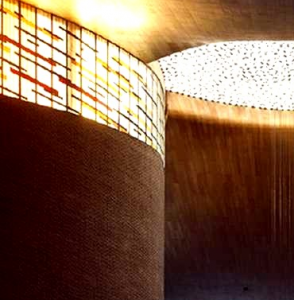 “L’architecture est le jeu savant, correct et magnifique des volumes sous la lumière.”
With this well-known statement of 1923, Le Corbusier reaffirmed the role of light as the revealer of architecture. This was nothing new, of course, and yet in the context of a re-founding of the discipline in a modernist key, these words register some changes in attitude, such as the increasing attention to the orientation and the exposure of buildings.
The . . . → En lire plus
Posté par Damien Bril, le 12 mars 2013;
« Le détail dans les cultures visuelles (Antiquité-XXIe siècle) »
Ktéma, n° 37 / 2012 (consulter le sommaire)
 Revue annuelle publiée avec le concours du CNRS 25 x 18 cm © Université de Strasbourg ISSN 0221-5896
Le n° 37 de cette revue est ici consacré à la publication des actes du colloque international organisé par l’UMR 7044 (Archimède), à Strasbourg, les 16 et 17 mars 2012.
Ces Actes sont l’aboutissement du IVe thème de recherche abordé dans le cadre du programme transversal MIMESIS du Centre « Archéologie et Histoire ancienne : Méditerranée- Europe – (ARCHIMÈDE), UMR 7044 ». L’objectif était de rassembler des historiens, historiens . . . → En lire plus
Posté par Damien Bril, le 12 mars 2013;
- Date et lieu de la journée d'étude : 14-15 mars 2013, Poitiers
Jeudi 14 et Vendredi 15 mars 2013 – Université de Poitiers, Département d’Histoire de l’art et Archéologie, Hôtel Fumé, 8 rue René Descartes, 86000, Poitiers. 14 mars (Bât. III, Amphi Bourdieu), 15 mars (Bât. III, Amphi Descartes).
 La séance de mars (3e vendredi du mois) du séminaire Frontières du patrimoine: circulation des savoirs, des objets et oeuvres d’art, est mutualisée avec des journées scientifiques prévues les 14 et 15 mars 2013, organisées à l’Université de Poitiers par Nabila Oulebsir (Centre Georg Simmel (ex. CRIA)-EHESS / Université de Poitiers).
Ces journées sont soutenues par le Master 2 Pro Patrimoines, Musées et Multimédia du Département d’Histoire de l’art et Archéologie, le Master 2 Recherche Civilisation, Histoire, Patrimoine, Sources (CRIHAM, Poitiers), le . . . → En lire plus
Posté par Damien Bril, le 11 mars 2013;
- Date limite : 10 mai 2013
- Date et lieu du colloque : 12-15 février 2014, Chicaco
Popularizing Architecture
Historians of German and Central European Art Session CAA 2014 Annual Conference
Chair: Wallis Miller, University of Kentucky
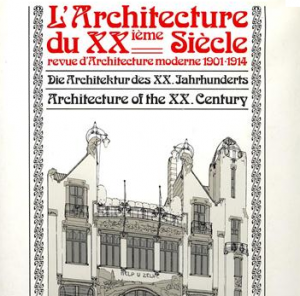 Popularizing Architecture will focus on the dissemination and circulation of new ideas in architecture to non-professional audiences in Germany and Central Europe since the late nineteenth century, when publications that included architecture began to emerge in large numbers. While most of these publications served professional audiences, non-professionals also began to form important audiences for architecture, as they did for other cultural pursuits. Over time, architectural exhibitions, film, radio, television, and the Internet joined newspaper and magazine articles to form a complex media landscape that continues to address a wide . . . → En lire plus
Posté par Damien Bril, le 10 mars 2013;
- Date limite : 1er juin 2013
- Date et lieu du colloque : 19-20 septembre 2013, Oxford
University of Oxford, Kellogg College, September 19 – 20, 2013 Deadline-CFP: 1 juin 2013
Heirs and Spares Conference
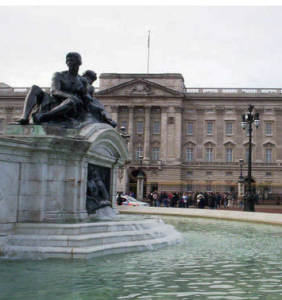 The Society for Court Studies is pleased to announce a two-day conference on the theme of royal ‘heirs and spares’ in early modern Europe, to be held in Oxford on 19-20 September 2013. The focus of the conference will be on heirs to the throne or those who might have been considered ‘extras’, security in case of the death of the heir. Too often the focus of historical research has been on those in the primary seat of power and authority, and rarely on those hovering in the wings, waiting for . . . → En lire plus
Posté par Damien Bril, le 7 mars 2013;
- Date limite : 5 mai 2013
- Date et lieu des rencontres : 4-14 juillet 2013, Madrid
The second PALATIUM Summer School “Court Residences as Places of Exchange in Late Medieval and Early Modern Europe » will be held in Madrid (Spain), from 4 to 14 July 2013.
 It will focus on the late medieval and early modern European court residence or ‘palace’ in an interdisciplinary perspective. The summer school will offer lectures on this topic by an international group of experts, as well as field trips to various castles and residences in central Spain. Participation is free and open to both MA and PhD students. The application deadline is 5 May.
More information on the programme and on the application procedure is available on the . . . → En lire plus
Posté par Damien Bril, le 4 mars 2013;
- Date limite : 15 juin 2013
- Date et lieu du colloque : 28-29 novembre 2013, Budapest
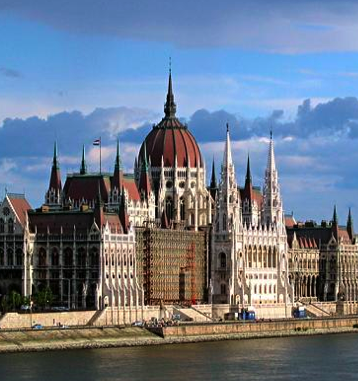
The Research Centre for the Humanities, Institute of Art History, Hungarian Academy of Sciences, in cooperation with CentrArt Association – New Workshop for Art Historians, is organizing an international symposium entitled Ephemeral Architecture in Central-Eastern Europe in the 19th and 20th centuries. This will be held in Budapest, 28-29th November, 2013.
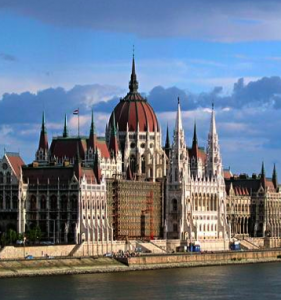 It will focus on Central-Eastern Europe as a fluid geo-political conception and politically unstable territory with constantly shifting borders within the given timespan. Recognizing the growing interest in the latest research on ephemeral architecture, this conference will focus on temporary constructions erected for national and international exhibitions as a means of conveying ideas to an immediate audience. In . . . → En lire plus
Posté par Damien Bril, le 3 mars 2013;
- Date limite : 15 avril 2013
CFP: “Histories of museology” | Art History Supplement, Issue 3.3, May 2013
Submission deadline: April 15, 2013
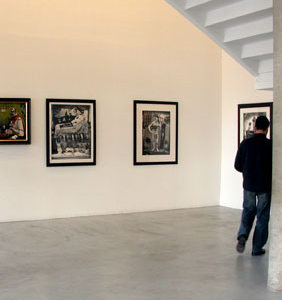 Latest technological developments and advances enable us to reconstruct up to some point previous exhibitions and make them available to a global audience for pleasure or research. Such endeavours would include the recent project of Art Institute of Chicago “Historic Exhibitions” celebrating the 100th anniversary of the International Exhibition of Modern Art, or else the Armory Show of 1913, the first large exhibition of modern art in America, organised by the Association of American Painters and Sculptors (http://extras.artic.edu/armoryshow). The University of Virginia, for instance, had also previously uploaded a website dedicated to the Armory Show (Welcome to the 1913 . . . → En lire plus
Posté par Damien Bril, le 27 février 2013;
- Date limite : 30 mai 2013
EKPHRASIS. Images, Cinema, Theatre, Media
Issue 1(8)/2013
East-Central European Criticism After the Fall of Communism: Cinema, Theatre, Visual Arts, Literature.
 After the fall of Communism in East-Central Europe, the newly gained liberty of expression has generated both a creative euphoria and a liberalization of critical interpretation. Since everything had to be rebuilt in keeping with the democratic principles after forty years of totalitarianism, criticism – in all fields, from visual arts to literature or cinema – has remained, at least in the 1990s, a sort of old acquaintance somehow useless for the making of the new society. Only after the year 2000, when the economical, social and political transition became relatively stable for the majority of the countries . . . → En lire plus
Posté par Damien Bril, le 26 février 2013;
- Date limite : 15 avril 2013
- Date et lieu du colloque : 26-28 septembre 2013, Florence
Images of the Art Museum: Connecting Gaze and Discourse in the History of Museology
Call for Papers International Conference Florence, 26-28 September 2013 Kunsthistorisches Institut in Florenz – Max-Planck-Institut Deadline-CFP: 15 avr. 2013
Organized by the Max Planck Research Group « Objects in the Contact Zone – The Cross-Cultural Lives of Things » directed by Eva-Maria Troelenberg
 Scholars normally consider the institution of the museum to have arisen in Europe. Historians have traced its origin back to the collections of the Renaissance princes and the « cabinets of curiosity », the ‘Kunstkammern’ and ‘Wunderkammern’, literally art chambers and wonder chambers, of sixteenth and seventeenth-century Western Europe. From . . . → En lire plus
Posté par Damien Bril, le 24 février 2013;
- Date limite : 1er avril 2013
- Date et lieu du colloque : 28 juin 2013, Manchester
The University of Manchester, June 28, 2013 Deadline-CFP: 1 avr. 2013
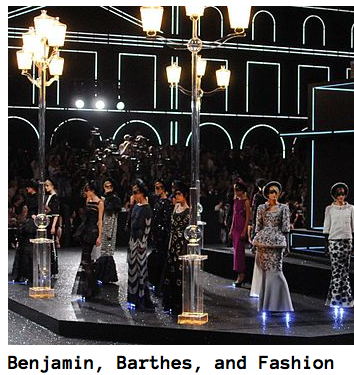
 Benjamin, Barthes, and Fashion
Historian, philosopher and literary critic Walter Benjamin wrote on fashion’s relationship to modernity, commodity fetishism, history, and memory. In his unfinished Arcades Project, the notes for a large section on Fashion reveal Benjamin’s desire to read the medium of dress culturally, materially, historically, and through his own brand of Marxist analysis.
Roland Barthes developed a semiotic system for interpreting the discourse of fashion. Barthes’The Fashion System, the seminal work on fashion and semiotics, suggests fashion can be understood as a language composed of codes, signs, and significations.
Both Barthes and Benjamin wrote on fashion’s . . . → En lire plus
Posté par Damien Bril, le 21 février 2013;
- Date limite : 1er mai 2013
- Date et lieu du colloque : 13-14 décembre 2013, Rome
« Métamorphose spectaculaire et anamorphose culturelle Les (en)jeux de l’ornement dans les festivités éphémères au premier âge moderne »
Rome, Academia Belgica
13-14 décembre 2013
 Qu’elle célèbre un événement politique ou religieux, la fête constitue un moment clef de la vie publique dans la société par et pour laquelle elle est produite. Fusionnant toutes les formes d’expression artistique afin de créer une expérience multi-sensorielle et de contribuer à la définition d’un espace-temps singulier, le spectacle constitue en effet un lieu privilégié pour appréhender la culture dont il émane et dont il met en exergue, voire parfois forge et transforme, les représentations et les imaginaires.
La plupart des études consacrées aux . . . → En lire plus
Posté par Damien Bril, le 21 février 2013;
- Date limite : 15 mai 2013
- Date et lieu du colloque : 8-10 novembre 2013, Washington DC
American University, Washington DC, November 8 – 10, 2013 Deadline-CFP: 15 mai 2013
Announcing the Fourth Annual FEMINIST ART HISTORY CONFERENCE at American University in Washington DC
Friday-Sunday, November 8-10, 2013
 This fourth annual conference continues to build on the legacy of feminist art-historical scholarship and pedagogy initiated by Norma Broude and Mary D. Garrard at American University. To further the inclusive spirit of their groundbreaking anthologies, we invite papers on subjects spanning the chronological spectrum, from the ancient world through the present, to foster a broad dialogue on feminist art-historical practice. Papers may address such topics as: artists, movements, and works of art and architecture; cultural institutions . . . → En lire plus
Posté par Damien Bril, le 18 février 2013;
- Date limite : 1er mars 2013
- Date et lieu du colloque : 18-20 avril 2013, Zagreb
Zagreb, Croatia, April 18 – 20, 2013 Deadline-CFP: 1 mars 2013
Call for Papers for the Panel: Identities and the Cities: Urban Transformations, Transition and Change in Urban Image Construction
(As part of the Euroacademia International Conference ‘Identities and Identifications’, Zagreb, 18 – 20 April 2013)
Panel Organizers: Tihana Puc and Ivana Nakikj, IMT Institute for Advanced Studies, Lucca, Italy
 Elasticity of the label identity accommodates everything that does and does not surround us, thus finding its place in every discourse on making and re-making, invention and re-invention, destruction and construction. Every transition is synonymous with said processes, be it a tectonic change or a peaceful shift. As political . . . → En lire plus
Posté par Damien Bril, le 14 février 2013;
- Date et lieu des rencontres : 28 février - 1er mars 2013, Milan
Milano, Università Cattolica, February 28-March 1, 2013
FARE LA STORIA DELL’ARTE OGGI La prospettiva storica. Ipotesi di discussione e rifondazione
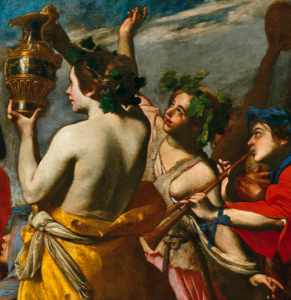 Il 28 febbraio e il 1 marzo 2013 si svolgeranno alla Università Cattolica di Milano le giornate di studio dal titolo FARE LA STORIA DELL’ARTE OGGI. La prospettiva storica. Ipotesi di discussione e rifondazione, organizzate dalla Consulta Universitaria Nazionale per la Storia dell’Arte – CUNSTA
Programma
GIOVEDI 28 febbraio 2013 Ore 10.45 Aula Pio XI
Saluto del Preside della Facoltà di Lettere e Filosofia Angelo Bianchi
Ore 11.00 – 13.30
Maria Grazia Messina, Università degli Studi di Firenze Introduzione ai lavori
Andrea De Marchi, Università degli Studi . . . → En lire plus
Posté par Damien Bril, le 13 février 2013;
- Date limite : 30 avril 2013
- Date et lieu du colloque : 27-28 septembre 2013, Vienne
University of Applied Arts Vienna, September 27 – 28, 2013 Deadline-CFP: 30 avr. 2013
Call for Papers
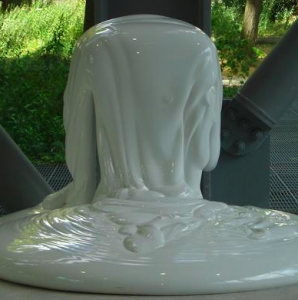 Flows (Un)bound: Fluid Materials in Artistic and Scientific Practices
Materials, and fluid materials in particular, exert a significant influence on the formation of those artistic and scientific practices within which they are employed and explored. They possess a certain agency that very often thwarts and escapes the original designs and intended goals of researchers and artists. As a result, they have great bearing on our modes of thinking and our imagination. Thus, fluid materials possess the capacity to shape knowledge in a substantial way. Or do they? And if they . . . → En lire plus
|
Équipe Rédacteur en chef : Olivier Bonfait.
Rédacteurs : Elliot Adam (Moyen Age) ; Nicolas Ballet (XX-XXIe siècles) ; Matthieu Fantoni (musées) ; Antonella Fenech Kroke (bourses) ; Vladimir Nestorov (Lettre mensuelle)
Administrateur web : Matthieu Lett.
ancien éditeur : Pascale Dubus
anciens rédacteurs : Gautier Anceau, Sébastien Bontemps, Damien Bril ; Sébastien Chauffour ; Ludovic Jouvet ; Aude Prigot
|

 Les commentaires sont clos
 Appels à communication, Événements
 Théorie et interprétation, Transpériode