Posté par Sébastien Bontemps, le 16 avril 2013;
 Studies in Art Historiography, published by Ashgate welcomes contributions from architectural historians:
Much recent historiography has focused on scholars of ‘Art History’ but many of these made considerable contributions to architectural history, from Heinrich Wölfflin whose Renaissance und Barock is essentially architectural history, to Rudolf Wittkower whose impact is usually assessed in relation to the architectural profession and Modernist architecture. Cornelius Gurlitt, Geoffrey Scott, Hans Sedlmayr, Nikolaus Pevsner, Colin Rowe, Venturi and Scott Brown are just some of the names that come to mind and Studies in Art Historiography welcomes proposals for volumes dedicated to relevant themes in architectural historiography as well as individual studies of significant figures in the field.
More information about our book series and submission . . . → En lire plus
Posté par Olivier Bonfait, le 1 avril 2013;
- Date limite : 15 juin 2013
Appel à contribution pour le numéro 73 (automne 2013) de la revue Histoire de l’art: Objets sacrés
 « Les objets matériels sont les métaphores corporelles des choses spirituelles ». Cette phrase de saint Augustin, bien connue des théologiens et des historiens de l’art occidental prouve que l’objet, liturgique surtout mais décoratif aussi, peut revêtir une dimension si ce n’est sacrée, du moins spirituelle. Dans ce domaine, nombreux sont encore les champs inexplorés et inexploités par les chercheurs. Quelques travaux récents, notamment pour les périodes anciennes, livrent déjà un état de la question, au moins partiel, comme les réflexions récentes consacrées à la relique. La table ronde des . . . → En lire plus
Posté par Damien Bril, le 30 mars 2013;
- Date limite : 30 septembre 2013
Arts de l’oubli Formes et re-présentations
 Ce numéro se propose d’analyser des images et des formes de l’oubli de l’Antiquité à nos jours.
Au fil des siècles, mémoire et oubli ont été à tour de rôle les dépositaires de valeurs sociales, culturelles, philosophiques, politiques, artistiques et, selon les époques et les contextes, ont pu prendre des significations opposées et/ou complémentaires.
Des Lotophages homériques aux Tristia d’Ovide, du mythe d’Er dans la République de Platon à la naissance des muses (oubli des maux) dans la Théogonie d’Hésiode, l’oubli a été décrit comme étant un obstacle à dépasser mais aussi comme une ressource, à savoir un passage incontournable avant le retour à . . . → En lire plus
Posté par Matthieu Lett, le 21 mars 2013;
- Date limite : 30 juin 2013
 2013 – ISSUE N.1 SECOND PHASE AND “CÓMPLICES NECESARIOS” (NECESARY ACCOMPLICES) ISSUE
Founded 25 years ago, Espacio Tiempo y Forma. Serie VII. Historia del Arte now enters a new era. From 2013, the journal is published online and in print; its layout, cover, numbering, and assessment criteria for academic quality have been renewed with the aim of increasing the journal’s impact. The new phase begins with the journal’s incorporation to the Open Journal Systems (OJS) and the launch of an annual themed issue edited by leading scholars in the field. The themed issue will consist of two articles by guest authors and is open to submissions of original and outstanding work that will be . . . → En lire plus
Posté par Damien Bril, le 18 mars 2013;
- Date limite : 30 avril 2013
Thresholds 42: « Human » prompts us to consider the past and present changing notion of ‘the human’ with regards to its physical, virtual, and psychological habitat.
 In the last decade innovations within cognitive imaging, computer interfaces, communication technologies, surrogate natures, sensory mediators, and global tracking have reshaped our understanding of the Self. This shift can be seen, on one hand, as a revolution of sensibilities while, on the other hand, still pushing towards an enlightenment-based, rationalist perspective of the human as a neurobiological mechanism. No matter which way this ‘human’ is being reshaped, does it not also reshape ‘the humanities’ as well as our understanding of . . . → En lire plus
Posté par Pascale Dubus, le 18 mars 2013;
- Date limite : 30 mai 2013
 Dans le champ des études modernistes, beaucoup reste à faire sur le(s) surréalisme(s) américain(s) de l’entre-deux-guerres. Longtemps associés aux mouvements contestataires des années soixante, ou à de rares artistes isolés, à l’instar de Man Ray, ils se déploient dans le domaine de la littérature (Andrews, Barnes, Bowles, Burnett, Brown, Emory, Ford, Godwin, Niedecker, Nin, Miller, Patchen, Tyler, Thompson, West, Williams), de la théorie (Miller, Neagoe, Parker, West, Williams), des arts plastiques et visuels (Calas, Calder, Clark, Cornell, Donati, Duchamp, Gorky, Hare, Kamrowski, Laughlin, Man Ray, Lee Miller, Reynolds, Sage, Tanning) et du cinéma (comme l’illustre « The Devil’s Plaything . . . → En lire plus
Posté par Leonard Pouy, le 18 mars 2013;
- Date limite : 1er septembre 2013
 Rubens scholars kindly are invited to submit original articles for the next issue of the Rubensbulletin, the online journal of the Royal Museum of Fine Arts Antwerp. The Rubensbulletin focuses on art historical research topics related to the work of Peter Paul Rubens and his assistants.
The title of the electronic periodical refers to the Rubens Bulletijn, a journal that appeared in Antwerp from 1882 to 1910 and that used to disseminate sources on Rubens and his contemporaries across the world. The new Rubensbulletin continues this long tradition of Rubens research in Antwerp, the master’s hometown. By means of this forum, the Royal Museum . . . → En lire plus
Posté par Damien Bril, le 13 mars 2013;
- Date limite : 10 avril 2013
- Date et lieu du colloque : 24-25 octobre 2014, Mendrisio
Accademia di Architettura, Mendrisio CH, October 24-25, 2014 Deadline-CFP: 10 avr. 2013
“Le jeu savant”. Light and Darkness in XX Century Architecture Publication and Conference
CALL FOR PAPERS – English Version [Testo in italiano in fondo]
 “L’architecture est le jeu savant, correct et magnifique des volumes sous la lumière.”
With this well-known statement of 1923, Le Corbusier reaffirmed the role of light as the revealer of architecture. This was nothing new, of course, and yet in the context of a re-founding of the discipline in a modernist key, these words register some changes in attitude, such as the increasing attention to the orientation and the exposure of buildings.
The . . . → En lire plus
Posté par Olivier Bonfait, le 10 mars 2013;
Architectural Histories, the new open access journal of the European Architectural History Network (EAHN), is now online and open to submissions.
Architectural Histories is an international, blind peer-reviewed scholarly journal that creates a space where historically grounded research into all aspects of architecture and the built environment can be made public, consulted, and discussed. The journal is open to historical, historiographic, theoretical, and critical contributions that engage with architecture and the built environment from a historical perspective.
 We invite original contributions of the highest quality from scholars and critics in all stages of their career. The journal especially welcomes contributions that stimulate reflection and dialogue about the place . . . → En lire plus
Posté par Damien Bril, le 3 mars 2013;
- Date limite : 15 avril 2013
CFP: “Histories of museology” | Art History Supplement, Issue 3.3, May 2013
Submission deadline: April 15, 2013
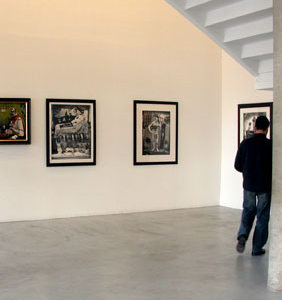 Latest technological developments and advances enable us to reconstruct up to some point previous exhibitions and make them available to a global audience for pleasure or research. Such endeavours would include the recent project of Art Institute of Chicago “Historic Exhibitions” celebrating the 100th anniversary of the International Exhibition of Modern Art, or else the Armory Show of 1913, the first large exhibition of modern art in America, organised by the Association of American Painters and Sculptors (http://extras.artic.edu/armoryshow). The University of Virginia, for instance, had also previously uploaded a website dedicated to the Armory Show (Welcome to the 1913 . . . → En lire plus
Posté par Damien Bril, le 27 février 2013;
- Date limite : 30 mai 2013
EKPHRASIS. Images, Cinema, Theatre, Media
Issue 1(8)/2013
East-Central European Criticism After the Fall of Communism: Cinema, Theatre, Visual Arts, Literature.
 After the fall of Communism in East-Central Europe, the newly gained liberty of expression has generated both a creative euphoria and a liberalization of critical interpretation. Since everything had to be rebuilt in keeping with the democratic principles after forty years of totalitarianism, criticism – in all fields, from visual arts to literature or cinema – has remained, at least in the 1990s, a sort of old acquaintance somehow useless for the making of the new society. Only after the year 2000, when the economical, social and political transition became relatively stable for the majority of the countries . . . → En lire plus
Posté par Laëtitia Pierre, le 10 février 2013;
- Date limite : 15 juin 2013
 Si saint Augustin estime, au Ve siècle de notre ère, que Dieu seul peut être appelé Maître, il n’en reste pas moins que les hommes ont souvent éprouvé le besoin de suivre des instructeurs, des guides, des intercesseurs qui apparaissent, à travers les siècles et les cultures, comme autant d’incarnations de la figure du maître spirituel. Directeur de conscience ou gourou, père spirituel ou intellectuel, le maître captive et capture. Face à lui, le fidèle abdique-t-il sa personnalité ou, au contraire, progresse-t-il dans sa quête du salut ?
Quelle que soit la tradition dans laquelle il s’inscrit, le maître est d’abord celui qui transmet : les formes religieuses, . . . → En lire plus
Posté par Damien Bril, le 7 février 2013;
- Date limite : 15 février 2013
- Date et lieu du colloque : 15-16 mars 2013, Prague
Prague, Czech Republis, March 15 – 16, 2013 Deadline-CFP: 15 févr. 2013
Call for Papers for the Panel: Histories and Imaginaries: European Art versus American Art
(As part of the Third Euroacademia Global Conference ‘Europe Inside-Out: Europe and Europeaness Exposed to Plural Observers’, 15 -16 March, Grand Majestic Plaza, Prague, Czech Republic)
 Panel Description:
Perceptions of history and historicity are considered to substantially influence and configure the sphere of imaginary representations. The universe of arts is the main environment where essentializations of conceived symbols or reactions to such essentializations are most emphatically expressed and visible. It is an often made argument that arts do reflect in a substantive . . . → En lire plus
Posté par Damien Bril, le 4 février 2013;
- Date limite : 28 février 2013
Artelogie Journal Appel à contribution N° 5 Art and gender: women creators in Latin America
Org: Ana Paula Cavalcanti Simioni (professor, IEB/USP-Brazil), Maira Ishtar de Luca (PhD student, Efisal/CRAL-EHESS), Deborah Dorotinsky (researcher, IIE-UNAM, Mexico)
 For this edition of Artelogie we intend to explore on the one hand the possible intersection between artistic creation (production) and gender relations, and on the other, the relationship that gender studies have with those of territoriality. We aim to establish a dialogue between scholars working in and on Latin America.
Since the publication of Linda Nochlin’s well known essay « Why have there been no great women artists? » (1971), we can . . . → En lire plus
Posté par Katherine Baker, le 3 février 2013;
- Date limite : 15 avril, 2013
 TSQ: Transgender Studies Quarterly vol.1, no.4: « Trans Cultural Production »
CFP Deadline: Apr 15, 2013
The arts have served as a cultural arena for imagining, creating, and proliferating transgender experiences and communities around the world. As part of its inaugural year, TSQ: Transgender Studies Quarterly (pub. Duke University Press) will feature a special issue examining trans cultural production in art, film, dance, design, architecture, literature, and music. We seek papers that critically analyze the current state, history, and significance of these expressive forms as they address, depict, and are mobilized by trans subjects broadly defined, including people whose gender/sex expression is not informed primarily by contemporary Western . . . → En lire plus
Posté par Damien Bril, le 26 janvier 2013;
- Date limite : 1er avril 2013
RECONSTITUTION / RE-ENACTMENT
Deadline-CFP: 1 avr. 2013
 L’engouement autour de la «reconstitution» (re-enactment) que l’on observe depuis un certain temps dans le domaine des arts est un phénomène que esse, dans ce dossier, souhaite interroger sous un angle critique. D’entrée de jeu, un problème terminologique se pose eu égard à la généralisation des manifestations de reprise, de répétition, de réactualisation, de recyclage, de reconstruction et autres « re- » souvent invoqués en vrac dans les discours artistiques, si bien que le sens spécifique et la portée critique des pratiques relevant de la « reconstitution » tendent à se perdre. D’abord, y a-t-il une véritable spécificité au geste de « . . . → En lire plus
Posté par Damien Bril, le 24 janvier 2013;
- Date limite : 28 janvier 2013
- Date et lieu du colloque : 26 avril 2013, New Brunswick
Call for Abstracts: Networks
Art History Graduate Student Symposium Rutgers, The State University of New Jersey April 26, 2013 Deadline-CFP: 28 janv. 2013
 “A culture may be conceived as a network of beliefs and purposes in which any string in the net pulls and is pulled by the others, thus perpetually changing the configuration of the whole.” – Jacques Barzun
What constitutes a network and how do networks operate across time and space? How have social, cultural, and artistic networks been defined and functioned historically? How has the global turn reconfigured such networks? How have networks been embedded in art history and art practice across time?
The Art History . . . → En lire plus
Posté par Damien Bril, le 16 janvier 2013;
- Date limite : 25 février 2013
« Histories of conservation » Art History Supplement, Issue 3.2, March 2013 Submission deadline February 25, 2013
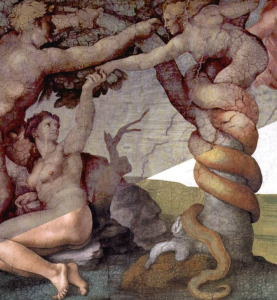 In a recent fund raising email campaign (December 17, 2012), Michael Gallagher, conservator in charge of the Department of Painting Conservation at The Metropolitan Museum of Art, stated: “Imagine a picture coated in a thick varnish, making the artist’s original brushwork almost undetectable. Then, imagine removing that discolored surface to reveal the true painting beneath – it is painstakingly careful work, but exhilarating when the picture returns to the gallery with its integrity restored.” This could be the formula through which, according to Gallagher, general public might have the chance . . . → En lire plus
Posté par Pascale Dubus, le 6 janvier 2013;
- Date limite : 31 mai 2013
- Date de remise des textes : 30 avril 2014
 Entre pornographie aristocratique d’Ancien Régime et porno de masse contemporain, le XIXe siècle se caractérise par le développement d’une pornographie bourgeoise. Bien que la période romantique ait vu se banaliser l’usage du terme « pornographie » dans son acception moderne, elle est pourtant assez fréquemment considérée comme une époque qui n’aurait fait que perpétuer dans ce domaine celle qui l’a précédée ou annoncer celle qui la suivra. Fidèle au questionnement historique que poursuit la revue Romantisme, ce numéro voudrait s’interroger sur la singularité de ce moment romantique ou moderne de la pornographie.
Les transformations sociales qui accompagnent la révolution industrielle, l’urbanisation, la libéralisation des . . . → En lire plus
Posté par Damien Bril, le 21 décembre 2012;
- Date limite : 3 mars 2013
Call for Journal Contributions for Interstices #14: Immaterial Materialities – Materiality and Interactivity in Art and Architecture
 Materiality has recently claimed centre stage in architectural discourse and practice, yet its critical meaning is ever receding. Tropes like material honesty, digital materiality, material responsiveness and dematerialisation mark out an interdisciplinary field where scientific fact and artistic experimentation interact, and where what in fact constitutes materiality is constantly re-imagined. As a reaction to developments in science, materiality came under scrutiny with the emergence of nineteenth century German aesthetics and the early avant-garde projects. Initiating an epistemic shift in art and architecture, these works pointed point to the connection between the concrete . . . → En lire plus
|
Équipe Rédacteur en chef : Olivier Bonfait.
Rédacteurs : Elliot Adam (Moyen Age) ; Nicolas Ballet (XX-XXIe siècles) ; Matthieu Fantoni (musées) ; Antonella Fenech Kroke (bourses) ; Vladimir Nestorov (Lettre mensuelle)
Administrateur web : Matthieu Lett.
ancien éditeur : Pascale Dubus
anciens rédacteurs : Gautier Anceau, Sébastien Bontemps, Damien Bril ; Sébastien Chauffour ; Ludovic Jouvet ; Aude Prigot
|

 Studies in Art Historiography, published by Ashgate welcomes contributions from architectural historians:
 Les commentaires sont clos


