Posté par Olivier Bonfait, le 14 septembre 2026;
- Date limite : 1er nov. 26
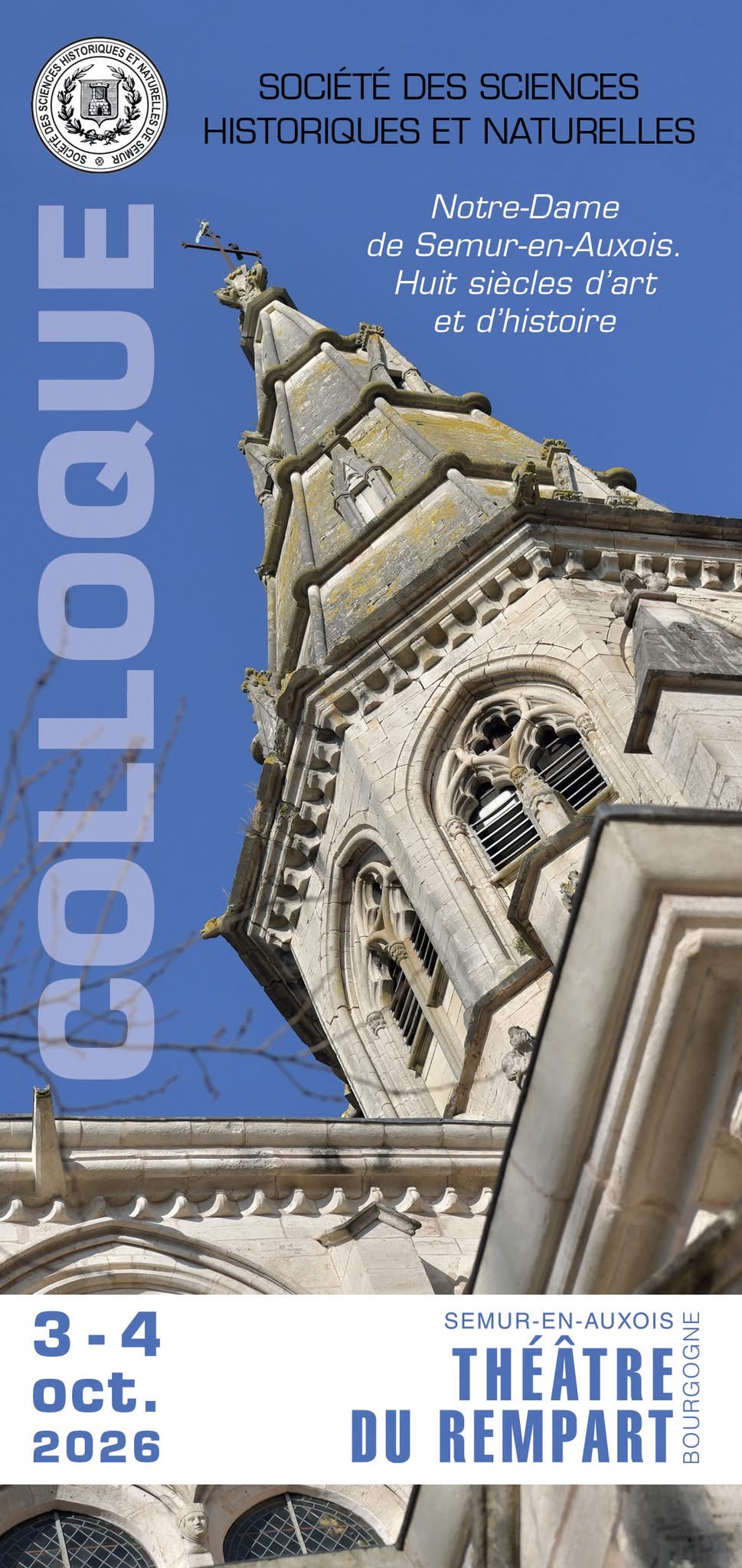
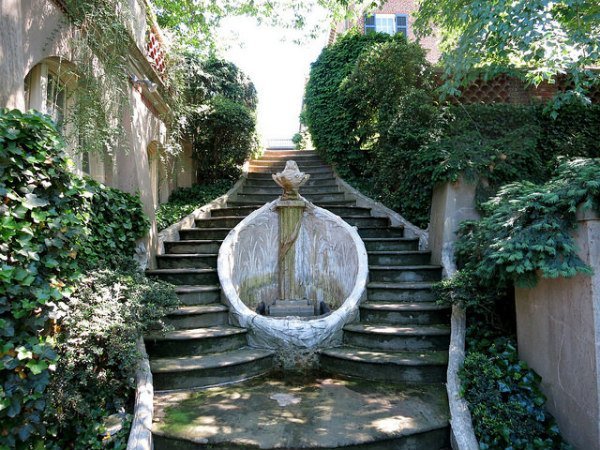
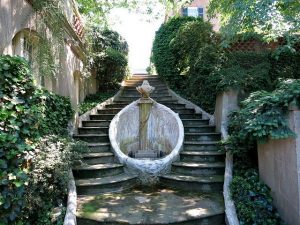 I Tatti, The Harvard University Center for Italian Renaissance Studies in Florence, Italy, warmly invites applications for the 2027–2028 academic year. We offer the following post-doctoral fellowships (n.b. deadlines vary): I Tatti, The Harvard University Center for Italian Renaissance Studies in Florence, Italy, warmly invites applications for the 2027–2028 academic year. We offer the following post-doctoral fellowships (n.b. deadlines vary):
I Tatti/Dumbarton Oaks Joint Fellowship (ten months; deadline November 1) for early and mid-career scholars who explore cross-cultural contacts in and beyond the late medieval and early modern Mediterranean. Fellows will spend the fall term in Florence and the spring term in Washington, D.C.
For more information on all fellowships at Villa I Tatti please visit http://itatti.harvard.edu/programs
Posté par Olivier Bonfait, le 14 septembre 2026;
- Date limite : 19 oct. 2026
 Professor of the History of Art. University of Oxford in association with Trinity College. Professor of the History of Art. University of Oxford in association with Trinity College.
We are seeking applications for the Professorship of the History of Art, available from 1 October 2027. This is a prestigious professorship which has an important leadership role within and beyond Oxford in maintaining and enhancing the University’s global reputation in the field of the History of Art. The Professor will join the Department of the History of Art at an exciting moment in its development, with the recent creation of new academic posts and expansion in postgraduate numbers.
We are looking to appoint an art historian who has an internationally-recognised research . . . → En lire plus
Posté par Vladimir Nestorov, le 4 septembre 2026;
- Date et lieu du colloque : 3-4 octobre 2026, Semur-en-Auxois
 Colloque : « Notre-Dame de Semur-en-Auxois. Huit siècles d’art et d’histoire » (Semur-en-Auxois, 3 et 4 octobre 2026) Colloque : « Notre-Dame de Semur-en-Auxois. Huit siècles d’art et d’histoire » (Semur-en-Auxois, 3 et 4 octobre 2026)
Semur-en-Auxois, Théâtre municipal, rue du Rempart, 3-4 octobre 2026
« Un des monuments les plus remarquables de la Bourgogne » selon Mérimée, l’église Notre-Dame de Semur-en-Auxois a été classée monument historique dès 1840 et restaurée par Viollet-le-Duc de 1844 à 1854. Construite en 1225 sur l’emplacement d’une église romane, elle fut complétée par des chapelles latérales aux XVème et XVIème siècles. Elle se caractérise par une nef particulièrement élancée et des murs d’une grande minceur. Le tympan du portail nord, les masques . . . → En lire plus
Posté par Sylvain Demarthe, le 1 septembre 2026;
- Date et lieu du colloque : Nîmes, 22-23 octobre 2026

Journées d’études : « La cathédrale Notre-Dame-et-Saint-Castor de Nîmes, un monument historique et son mobilier » (Nîmes, 22-23 octobre 2026)
Nîmes – Auditorium du Musée de la Romanité
Propriété de l’Etat – ministère de la culture, l’édifice a été classé en 1906 au titre des monuments historiques et a bénéficié depuis 2016 d’importants travaux de restauration. Après l’aménagement intérieur du narthex, la façade occidentale a fait l’objet d’un grand chantier qui s’est déroulé de 2022 à 2025 : la frise sculptée romane et le clocher gothique ont depuis retrouvé leur éclat. L’année 2026 voit par ailleurs l’installation dans le chœur, après plus . . . → En lire plus
Posté par Olivier Bonfait, le 29 juin 2026;
- Date limite : 20 septembre
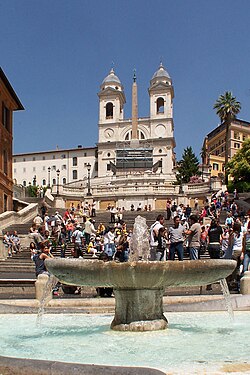
Rom, Spanische Treppe
The Architecture of Bell Towers from the Middle Ages to the Early Modern Period. Form | Material | Structure.
Sapienza Università di Roma, Aula Magna of the Department of History, Representation and Restoration of Architecture, Piazza Borghese 9, Jan 13–15, 2027 Deadline: Sep 20, 2026
Bell towers are structures characterized by a vertical development and by the presence, at their summit, of a system designed to transmit sound through bell installations. Two principal categories may therefore be identified: the bell towers associated with religious buildings, particularly Christian churches, and civic towers. Both types were historically . . . → En lire plus
Posté par Vladimir Nestorov, le 26 juin 2026;
- date limite des propositions : 30 septembre 2026
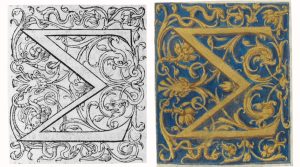 Appel à communications : Colloque « L’initiale ornée, entre manuscrit et imprimé (France, 1450-1550) » (Tours, 18-19 février 2027) Appel à communications : Colloque « L’initiale ornée, entre manuscrit et imprimé (France, 1450-1550) » (Tours, 18-19 février 2027)
Colloque de clôture du projet ANR TypoReF (CESR-Université de Tours) organisé par Anna Baydova, Pascale Charron et Rémi Jimenes
Souvent délaissée par les historiens de l’art qui focalisent à juste titre leur attention sur les illustrations, les miniatures ou le décor marginal et réduite par les historiens du livre au statut de simple indice susceptible d’attribuer une publication à un imprimeur donné, l’initiale ornée occupe pourtant une place essentielle dans l’histoire visuelle du livre. À la croisée du texte et de l’image, de l’écriture . . . → En lire plus
Posté par Elliot ADAM, le 10 juin 2026;
- Date de remise des propositions : 30 septembre 2026
- Date : 4-6 juin 2027
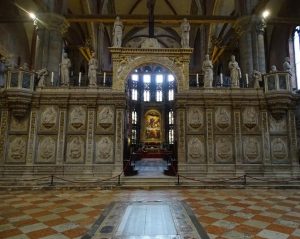 Appel à communication : « The Art of the Choir in the Medieval and Early Mediterranean World », Hybrid International Conference (Nicosie, Université de Chypre/en ligne, 4-6 juin 2027) Appel à communication : « The Art of the Choir in the Medieval and Early Mediterranean World », Hybrid International Conference (Nicosie, Université de Chypre/en ligne, 4-6 juin 2027)
Argumentaire
Practice both shapes and is shaped by the spaces that encompass it. Although this may appear an obvious statement, it remains no less true, inviting a holistic consideration of architectural spaces, their adornment, and their furnishings in conjunction with the human agents that created and used them and the actions that activated and enlivened them. As a result of this dynamic, reciprocal relationship, no solution to the articulation and . . . → En lire plus
Posté par Olivier Bonfait, le 31 mai 2026;
- Date limite : 30 juin 2026
Reinventing the Middle Ages to Build the Nation (4-5 Feb 27)
Bibliotheca Hertziana – Max Planck Institute for Art History, Rome, Feb 4–05, 2027 Deadline: Jun 30, 2026
Reinventing the Middle Ages to Build the Nation. Visual Arts and Identity Strategies in Pre- and Post-Unification Italy (1830–1910) – International Conference.
For nineteenth-century Italy, the Middle Ages were far more than a historical period. In its various interpretations, the medieval era became a symbolic terrain on which the ideals of the Risorgimento were forged and, after 1861, where the foundations of a nascent national tradition were sought. Across many European nations, the Middle Ages underwent a process of identity-driven rediscovery and revaluation. In Italy, however, this process took on a distinctive character, shaped by the country’s geopolitical fragmentation and the . . . → En lire plus
Posté par Bertrand Cosnet, le 1 mai 2026;
 Journée d’études : « Au-delà de la mimesis : représenter l’invisible au Moyen Âge », 17e rencontres GRIM-IMAGO (Paris, INHA, salle Demargne, 28 mai 2026). Journée d’études : « Au-delà de la mimesis : représenter l’invisible au Moyen Âge », 17e rencontres GRIM-IMAGO (Paris, INHA, salle Demargne, 28 mai 2026).
Argumentaire Voir https://blog.apahau.org/appel-a-communication-17e-rencontres-grim-imago-au-dela-de-la-mimesis-representer-linvisible-au-moyen-age-paris-28-mai-2026/
9h30 – Vincent Debiais (CNRS / CRH – AHLoMA) Abstraction en problèmes : mimesis et écarts visuels au Moyen Âge
10h10 – Mathias Egger (EPHE/INHA) Introduire en image les lettres des Écritures : logiques mimétique et abstraite dans les frontispices des tétraévangiles coptes de Basse-Égypte médiévale (XIIe – XIIIe siècle)
10h40 – Max Hello (Paris 1 Panthéon-Sorbonne) Le frontispice de la messe pascale du Missale Gothicum (v. 700) : une évocation ornementale du Dieu . . . → En lire plus
Posté par Elliot ADAM, le 29 avril 2026;
 Colloque : « La matière de la mémoire. Choix, mise en oeuvre et symbolique des matériaux dans l’art funéraire médiéval en Europe (XIIe-XVe siècles) » (Bordeaux/Pessac/Saint-Émilion, 4-5 juin 2026) Colloque : « La matière de la mémoire. Choix, mise en oeuvre et symbolique des matériaux dans l’art funéraire médiéval en Europe (XIIe-XVe siècles) » (Bordeaux/Pessac/Saint-Émilion, 4-5 juin 2026)
Colloque organisé dans le cadre du programme EFFIGY, Images de soi : monuments funéraires à effigies du Moyen Âge (ANR-24-CE27-4227).
Jeudi 4 juin Odéon de l’Archéopôle, Université Bordeaux-Montaigne (8 esplanade des Antilles, Pessac)
9h : Accueil des participants
9h15 : Introduction
9h30-10h45 : Les ateliers de tombiers Modération Christian Gensbeitel (Université Bordeaux Montaigne, Archéosciences Bordeaux)
Jean-Marie Guillouët (Université Bourgogne Europe, ARTEHIS) : Le commerce de la mémoire : l’exportation des dalles et lames . . . → En lire plus
Posté par Elliot ADAM, le 28 avril 2026;
 Colloque : « Tutoyer le ciel ! Tours, sanctuaires perchés et chapelles hautes à l’époque romane » (Saint-Michel de Cuxa, 6-11 juillet 2026) Colloque : « Tutoyer le ciel ! Tours, sanctuaires perchés et chapelles hautes à l’époque romane » (Saint-Michel de Cuxa, 6-11 juillet 2026)
Les Journées romanes réunissent durant six jours, en juillet, généralement la seconde semaine du mois, un public passionné et des conférenciers de haut niveau. Le programme alterne des journées de conférences, à l’abbaye Saint-Michel de Cuxa, données par des universitaires ou chercheurs, et des visites des principaux monuments romans, en Roussillon et dans les régions voisines : Catalogne, Languedoc. Une ambiance conviviale caractérise les Journées. Les repas sont pris à Cuxa, l’hébergement est assuré à Prades (navettes). Les Journées romanes . . . → En lire plus
Posté par Bertrand Cosnet, le 24 avril 2026;
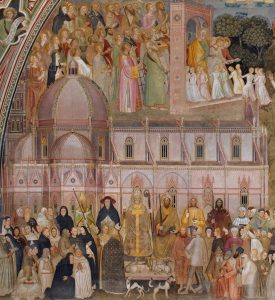 Journée d’études : Atelier Trecento (Paris, INHA, 26 mai 2026) Journée d’études : Atelier Trecento (Paris, INHA, 26 mai 2026)
L’Atelier Trecento rassemble et fédère l’ensemble des spécialistes de l’étude de la production artistique italienne du long XIVe siècle (de Nicola Pisano à Fra Angelico), dispersés en France dans les musées, les bibliothèques, les centres de recherche, les universités et les laboratoires. Ses journées d’études ouvrent des espaces de discussion entre ces différents spécialistes et dressent un état des lieux de l’actualité des travaux de recherche réalisés en France.
Programme
9h Accueil
9h15 Session 1 Présentation : Anne-Laure Imbert (Université Toulouse-Jean Jaurès, FRAMESPA)
9h15-10h – Sylvain Piron (École des Hautes Études en Sciences . . . → En lire plus
Posté par Elliot ADAM, le 15 avril 2026;
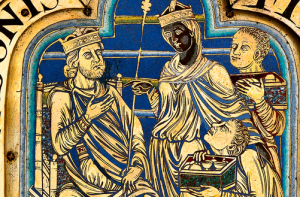 Colloque : « Nicholas of Verdun’s Pulpit for Klosterneuburg » (en ligne / Vienne et Klosterneuburg, 7-9 mai 2026) Colloque : « Nicholas of Verdun’s Pulpit for Klosterneuburg » (en ligne / Vienne et Klosterneuburg, 7-9 mai 2026)
The workshop brings together scholars from various disciplines to explore the work of Nicholas of Verdun from new perspectives. The focus is on his enamel work (1181), preserved in Klosterneuburg, one of the most significant examples of High Medieval goldsmithing, which stands out for its complex visual language, theological themes, and inscription regarding its authorship.
Programme
Thursday, May 7, 2026
Seminar Room 1 Department of Art History, University of Vienna Universitätscampus Hof 9, Garnisongasse 13 1090 Vienna & online (Zoom)
17:00–17:30 Welcome Address by Raphael Rosenberg, Head of . . . → En lire plus
Posté par Sylvain Demarthe, le 3 avril 2026;
- date limite des propositions : 30 avril 2026

Appel à contribution : Revue Capitellum, n°1 (Varia)
Capitellum est une revue scientifique francophone entièrement dédiée à l’histoire de l’art du Moyen Âge. La diffusion annuelle est exclusivement en ligne, en accès libre. Elle est effectuée par le comité de rédaction.
Capitellum propose de remettre les œuvres au cœur de l’étude. À un moment où l’on décrit souvent la discipline comme étant en crise, la revue vise à fédérer les chercheurs – débutants et confirmés – ainsi que les acteurs du patrimoine autour d’un objectif commun : questionner, renouveler les pratiques et les méthodes pour accroître notre connaissance . . . → En lire plus
Posté par Sylvain Demarthe, le 3 avril 2026;
- Date et lieu du colloque : 7-9 avril, Cluny
 Appel à communication Appel à communication
Colloque
« L’image à Cluny et dans les sites clunisiens (Xe – XIVe siècle). Circulation, échanges et évolution des discours iconographiques au sein de l’Ecclesia cluniacensis »
Depuis plus d’un siècle, une vaste historiographie consacrée à l’abbaye de Cluny a profondément renouvelé la compréhension des projets de réforme de l’établissement, des liens entretenus avec les pouvoirs séculiers et l’Église ainsi que des modalités d’affirmation d’une ecclésiologie spécifiquement clunisienne. Bien qu’abondante, cette production scientifique reste cependant largement fondée sur des sources textuelles. Au sein de cet ensemble foisonnant, quelques . . . → En lire plus
Posté par Olivier Bonfait, le 31 mars 2026;
- Date limite : 15 avril 2026
Grants for research on Chartres Cathedral
The American Friends of Chartres is accepting proposals for its annual research grant to support a research project requiring on-site research in Chartres that promises to advance knowledge and understanding of the cathedral of Notre-Dame de Chartres or its historical contexts in the medieval to early modern period. The American Friends of Chartres will provide a grant of $2,500.00 and will facilitate access to the cathedral, the Centre International du Vitrail, the municipal library, archival collections and related resources.
Topics in the fields of art history, history, or related disciplines might include architecture, stained glass, sculpture, urban development, economy, religious practices, manuscripts, or the cathedral treasury, among others.
Applicants may be graduate students, recent advanced degree recipients, or established scholars. Joint projects involving faculty . . . → En lire plus
Posté par Elliot ADAM, le 25 mars 2026;
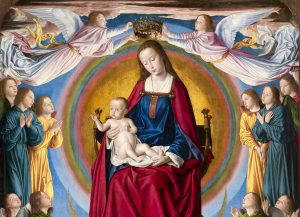 Journée d’études : « Jean Hey et le triptyque de Moulins : regards croisés sur une œuvre restaurée » (Paris, INHA et musée du Louvre, 22 avril 2026) Journée d’études : « Jean Hey et le triptyque de Moulins : regards croisés sur une œuvre restaurée » (Paris, INHA et musée du Louvre, 22 avril 2026)
Organisée par Elliot Adam, Sophie Caron, Philippe Lorentz et Dominique Martos-Levif
Cette journée d’études est organisée à l’occasion de la présentation exceptionnelle du triptyque de la Vierge glorieuse de la cathédrale Notre-Dame de Moulins au musée du Louvre du 26 novembre 2025 au 31 août 2026, à la suite de sa restauration fondamentale dans les ateliers du C2RMF par l’atelier Arcanes pour la couche picturale et le groupement Tournillon pour le support bois. Elle a . . . → En lire plus
Posté par Le Centre allemand d'histoire de l'art de Paris, le 19 mars 2026;
- Dates et lieux : Lundi, 23 mars 2026, 18h et mercredi, 25 mars 2026, 18h30 au DFK Paris
Vendredi, 27 mars 2026, 18h00 à l'INHA
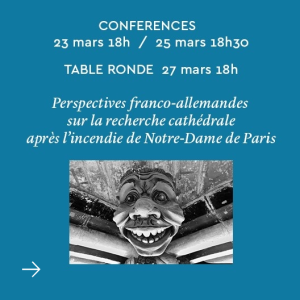
Dans le cadre de l’atelier de recherche international Perspectives franco-allemandes sur la recherche cathédrale après l’incendie de Notre-Dame de Paris, le DFK Paris organise en collaboration avec la Otto-Friedrich-Universität Bamberg et l’Université Aix-Marseille deux conférences et une table ronde.
Conception et organisation scientifique :
Stephan Albrecht, Otto-Friedrich-Universität Bamberg
Julia Drost, Centre allemand d’histoire de l’art (DFK Paris)
Andreas Hartmann-Virnich, Université Aix-Marseille
Anna Chiara Knoblauch, Otto-Friedrich-Universität Bamberg
Avec le soutien de l’Université franco-allemande.
CONFÉRENCES :
Lundi, 23 mars 2026, 18h
Dany Sandron, Université Paris IV – Sorbonne, Centre André-Chastel :« L’impact des cathédrales à l’échelle du diocèse »
. . . → En lire plus
Posté par Olivier Bonfait, le 14 mars 2026;
- Date limite : 16 mai 2026
Innovative Research Tools and Methodologies for the Study of Medieval and Renaissance Sculpture. 13th ARDS Annual Conference on Current Research in Medieval and Renaissance Sculpture.
Since the late nineteenth century, and particularly over the past three decades, a substantial body of scholarship has emerged on medieval and Renaissance sculpture. Yet these works remain remarkably difficult to study. The challenges extend beyond their historical dispersal across rural parish churches and other remote sites. Even when sculptures are housed in museums, obstacles persist: their physical immobility, the constraints of viewing them without full three-dimensional access, and the complex interplay of materials and techniques that define their multimedia character. Moreover, the collaborative nature of their creation often obscures individual authorship and complicates attribution, especially when it relies on stylistic criteria. All . . . → En lire plus
Posté par Olivier Bonfait, le 14 février 2026;
- Date limite : 1er mai 2026
Threads of Knowledge: Weaving and the Life of Textiles in the Middle Ages and Renaissance. 29th Biennial Conference of the Medieval and Renaissance Studies Program of Barnard College.
For centuries, textiles clothed bodies and books, veiled relics, marked liturgical and political boundaries, and insulated and adorned walls. Their portability and preciousness made them ideal agents of exchange. They carried forms, materials, and techniques across vast regions and cultures. It is through textiles, perhaps more than any other artistic medium, that the global interconnectedness of this historical period comes into view. At the same time, their manufacture could remain insistently local and idiosyncratic, dependent as it was—before industrustrialization—on individual touch and rhythm. Textiles could be a luxury or a thing of everyday life, and medieval and Renaissance writers exploited . . . → En lire plus
|
Équipe Rédacteur en chef : Olivier Bonfait.
Rédacteurs : Elliot Adam (Moyen Age) ; Nicolas Ballet (XX-XXIe siècles) ; Matthieu Fantoni (musées) ; Antonella Fenech Kroke (bourses) ; Vladimir Nestorov (Lettre mensuelle)
Administrateur web : Matthieu Lett.
ancien éditeur : Pascale Dubus
anciens rédacteurs : Gautier Anceau, Sébastien Bontemps, Damien Bril ; Sébastien Chauffour ; Ludovic Jouvet ; Aude Prigot
|
 I Tatti, The Harvard University Center for Italian Renaissance Studies in Florence, Italy, warmly invites applications for the 2027–2028 academic year. We offer the following post-doctoral fellowships (n.b. deadlines vary):
 Les commentaires sont clos