Posté par Matthieu Lett, le 17 juin 2026;
- Date limite : 31 août 2026
- Date et lieu : 4-5 février 2027, Paris, Muséum National d'Histoire Naturelle
Journées d’étude les 4 et 5 février 2027 co-organisées par la Bibliothèque nationale de France et le Muséum national d’histoire naturelle
 Ces journées d’étude s’inscrivent dans un contexte de célébration de l’histoire naturelle et du vivant alors que la BnF consacre sa saison culturelle 2026/2027 aux Histoires d’animaux et que le Muséum national d’histoire naturelle fête ses 400 ans en 2026. Puissant vecteur de diffusion des avancées scientifiques ou formidable outil de questionnement du monde par l’être humain, l’art sera mis à l’honneur au cours de ces deux journées sur le thème « d’après nature : les artistes et leurs . . . → En lire plus Ces journées d’étude s’inscrivent dans un contexte de célébration de l’histoire naturelle et du vivant alors que la BnF consacre sa saison culturelle 2026/2027 aux Histoires d’animaux et que le Muséum national d’histoire naturelle fête ses 400 ans en 2026. Puissant vecteur de diffusion des avancées scientifiques ou formidable outil de questionnement du monde par l’être humain, l’art sera mis à l’honneur au cours de ces deux journées sur le thème « d’après nature : les artistes et leurs . . . → En lire plus
Posté par Olivier Bonfait, le 12 juin 2026;
- Date limite : 30 septembre 2026
The Art of Failure: Hybridity, Risk and the Limits of Artistic Projects, 1450–1900. 9th Philipp Hainhofer Colloquium.
The Augsburg art entrepreneur Philipp Hainhofer (1578–1647) designed highly elaborate display furniture, most of which contained numerous, equally masterfully crafted fittings and ranked among the most complex works of art of his time. Whilst the Pomeranian Art Cabinet (1611–1617), the earliest of these grand pieces of furniture, was created as a commissioned artwork, Hainhofer had his later major projects produced only for the open market. These works combined artistic and iconographic conception, the organisation of a collaborative working process that brought together a wide variety of arts, the marketing of the finished product, and, not least, logistics, transport and conservation. His late pieces of furniture reached such a degree of complexity and scale . . . → En lire plus
Posté par Olivier Bonfait, le 12 juin 2026;
- Date limite : 12 jul. 2027
EVA BERLIN CONFERENCE 2027 – Electronic Media and Visual Arts – 30th Edition.
Living Intelligence. Creativity Between Matter, Memory and Machine
The EVA Berlin Conference addresses the transformations underway across the cultural heritage, creative industries, and memory institutions in the context of accelerating digitalisation. Building on a continuous history dating back to 1994 and following its successful relaunch in 2023, the conference reaches a significant milestone with its 30th edition.
The growing convergence of digital technologies and artificial intelligence is fundamentally reshaping numerous fields and exerting profound influence on contemporary society. Generative AI tools, intelligent agents and assistants, hybrid experiential spaces, immersive XR technologies, and participatory interaction ecologies are among the defining developments of this moment — each demanding both technical rigour and speculative inquiry, and raising critical questions around . . . → En lire plus
Posté par Olivier Bonfait, le 12 juin 2026;
- Date limite : 1er juillet 2026
Association for Art History Annual Conference 2026, Call for Sessions and Workshops.
We are delighted that the Association for Art History’s 53rd Annual Conference will be hosted in partnership with the Department of Art History and Visual Culture at the University of Exeter.
Last year’s Annual Conference attracted almost 1000 attendees. It is popular with academics, curators, practitioners, PhD students, early-career researchers, and anyone engaged in art history research. Members of the Association get reduced conference rates, but non-members are welcome to attend and propose sessions and papers. Convenors are limited to convening one session. The Association for Art History’s Annual Conference brings together international research and critical debate about art history and visual culture. A key annual event, the conference is an opportunity to keep up to date with . . . → En lire plus
Posté par Olivier Bonfait, le 12 juin 2026;
- Date limite : 15 septembre 2026
 Appel à communication Les dames de fer, des Lumières à la Grande-Guerre en Europe (1715-1918) Date limite de l’appel : 15 septembre 2026. Date de l’événement : 4 novembre 2026. Lieu : Université Paris-Est Créteil (UPEC). Appel à communication Les dames de fer, des Lumières à la Grande-Guerre en Europe (1715-1918) Date limite de l’appel : 15 septembre 2026. Date de l’événement : 4 novembre 2026. Lieu : Université Paris-Est Créteil (UPEC).
À l’heure où l’histoire des femmes renouvelle profondément les approches de l’histoire, de l’histoire de l’art, des collections et des pratiques savantes, cette journée d’étude souhaite interroger la place des femmes dans le monde de la médaille et de la numismatique en Europe, des Lumières à la Grande-Guerre. Longtemps envisagé comme un domaine essentiellement masculin[1] – celui des érudits, antiquaires, collectionneurs et conservateurs – l’univers médaillistique apparaît pourtant . . . → En lire plus
Posté par Elliot ADAM, le 10 juin 2026;
- Date de remise des propositions : 30 septembre 2026
- Date : 4-6 juin 2027
 Appel à communication : « The Art of the Choir in the Medieval and Early Mediterranean World », Hybrid International Conference (Nicosie, Université de Chypre/en ligne, 4-6 juin 2027) Appel à communication : « The Art of the Choir in the Medieval and Early Mediterranean World », Hybrid International Conference (Nicosie, Université de Chypre/en ligne, 4-6 juin 2027)
Argumentaire
Practice both shapes and is shaped by the spaces that encompass it. Although this may appear an obvious statement, it remains no less true, inviting a holistic consideration of architectural spaces, their adornment, and their furnishings in conjunction with the human agents that created and used them and the actions that activated and enlivened them. As a result of this dynamic, reciprocal relationship, no solution to the articulation and . . . → En lire plus
Posté par Olivier Bonfait, le 31 mai 2026;
- Date limite : 31 juil. 2026
Historicizing Global Contemporary Art Markets
ARTIS – Institute of Art History, School of Arts and Humanities, University of Lisbon, will host the international conference « Historicizing Global Contemporary Art Markets: Trajectories, Infrastructures, and Regimes of Value ».
The conference seeks to provide a historically grounded and critical examination of the major transformations that have reshaped contemporary art markets since the late twentieth century, with particular attention to the accelerated developments of the twenty-first century. The globalisation of artistic circuits, the emergence of new collecting and market geographies, the expansion of art fairs and biennials, the role of galleries, auction houses, museums and private collections, and the increasing entanglement of art with finance, technology and luxury industries have significantly transformed the circulation, legitimation and valuation of contemporary art.
The event . . . → En lire plus
Posté par Olivier Bonfait, le 31 mai 2026;
- Date limite : 30 juin 2026
Exploring Tradition: Genealogies, Tensions, and Reinterpretations in Art-Historical Discourse.
Piazzale Aldo Moro 5, 00185 Roma, Feb 8–10, 2027 Deadline: Jun 30, 2026
The PhD Candidates of the Art History Program at Sapienza University of Rome are pleased to present the First International Doctoral Conference in Art History: Exploring Tradition: Genealogies, Tensions, and Reinterpretations in Art-Historical Discourse, to be held on February 8-10, 2027. The initiative and thematic choice stem from the necessity to question the concept of tradition, subjecting it to critical scrutiny and exploring its continuity and moments of rupture within the art-historical discourse.
Tradition, defined as the «transmission over time of customs and practices, models and norms» (Treccani), is often perceived as an immutable heritage, accepted and rooted in common consciousness. Yet, this concept . . . → En lire plus
Posté par Olivier Bonfait, le 31 mai 2026;
- Date limite : 30 juin 2026
Reinventing the Middle Ages to Build the Nation (4-5 Feb 27)
Bibliotheca Hertziana – Max Planck Institute for Art History, Rome, Feb 4–05, 2027 Deadline: Jun 30, 2026
Reinventing the Middle Ages to Build the Nation. Visual Arts and Identity Strategies in Pre- and Post-Unification Italy (1830–1910) – International Conference.
For nineteenth-century Italy, the Middle Ages were far more than a historical period. In its various interpretations, the medieval era became a symbolic terrain on which the ideals of the Risorgimento were forged and, after 1861, where the foundations of a nascent national tradition were sought. Across many European nations, the Middle Ages underwent a process of identity-driven rediscovery and revaluation. In Italy, however, this process took on a distinctive character, shaped by the country’s geopolitical fragmentation and the . . . → En lire plus
Posté par Olivier Bonfait, le 31 mai 2026;
- Date limite : 31 aout 2026
Disegnare per la Scultura: 1400-1970 (Pisa, 14-15 May 27)
Pisa, Scuola Normale Superiore, May 14–15, 2027 Date limite : 31 aout 2026
Drawing for Sculpture: 1400–1970 Pisa, Scuola Normale Superiore (May 14–15, 2027)
How and why do sculptors draw? This seemingly obvious question still struggles to find satisfactory answers in art history, despite the most valuable contributions, as well as commendable exhibitions, of the past two decades. The long-standing tendency in scholarly tradition to prioritize painting over sculpture, combined with the well-known difficulties associated with the connoisseurship of drawing, has in fact led to a surprising neglect of the issue concerning sculptors’ graphic work. This appears to be due, on the one hand, to an intrinsic (at least apparent) scarcity of works on paper – especially concerning the early . . . → En lire plus
Posté par Matthieu Fantoni, le 27 mai 2026;
- Date et lieu de la journée d'études : Vendredi 6 novembre 2026, Paris, Musée Bourdelle
- Date de remise des candidatures : 26 juin 2026
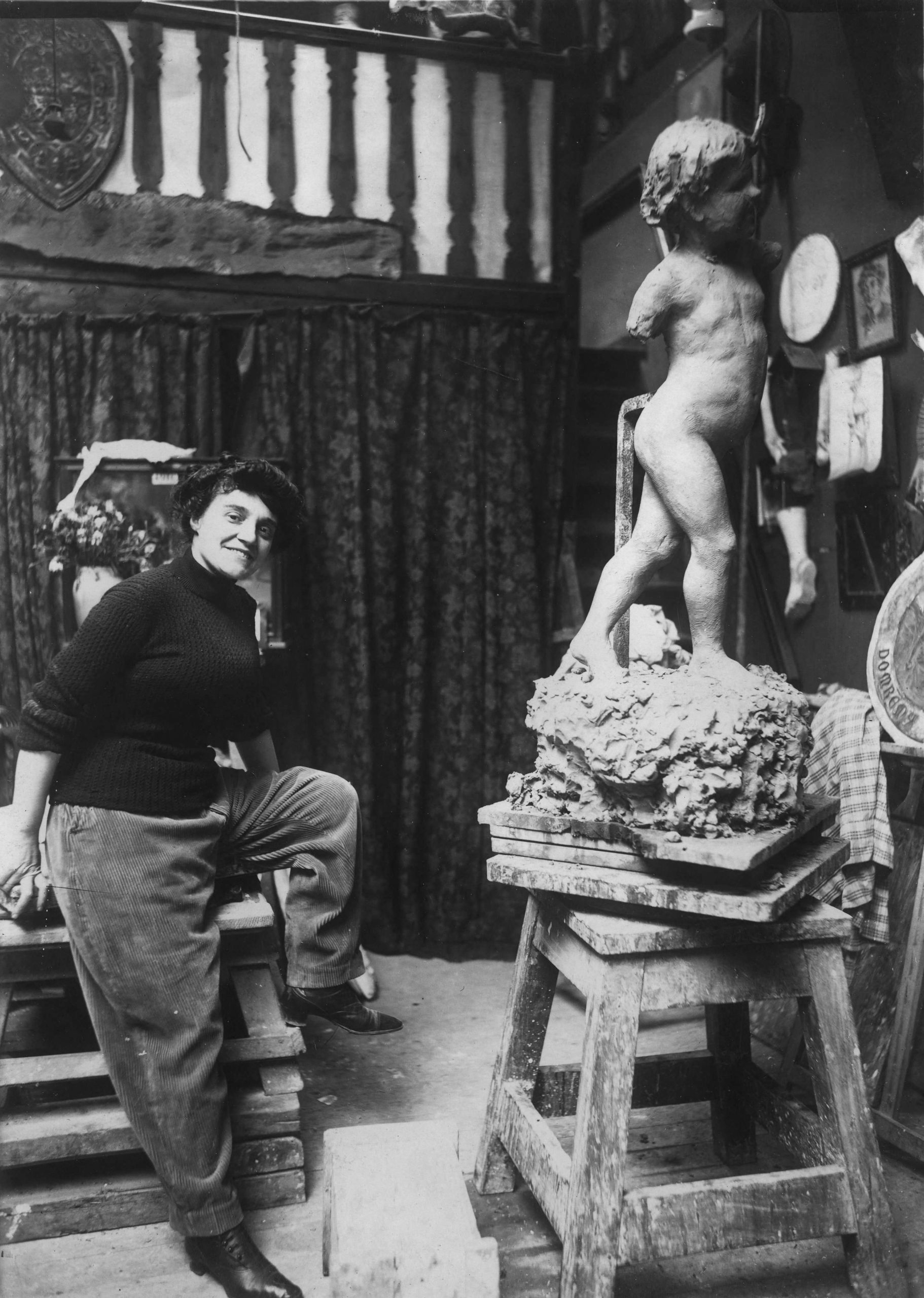
Suzanne Bizard (1873-1963), sculptrice française, Suzanne Bizard dans son atelier, s.d. © Albert Harlingue – Roger-Viollet
« […] Maintenant chez le peintre, la misère est la base fondamentale du costume. Plus de costumes du Moyen Âge, plus de chapeaux pointus et presque plus de cheveux longs. Les rapins excentriques n’existent que dans les vaudevilles. On ne voit aujourd’hui au Louvre que chapeaux hors d’âge […] et souliers qui font trembler leurs propriétaires à la moindre pluie. Ou bien on remarque des peintres qui ont des habits honnêtes, et des . . . → En lire plus
Posté par Elliot ADAM, le 18 mai 2026;
- Date : 6 novembre 2026
- Date de la remise des propositions : 7 juin 2026
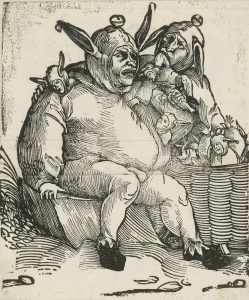
Barthel Beham, Deux mangeurs de fous, gravure sur bois, 27.5×23.3cm, vers 1524, Berlin, Kupferstichkabinett, n°inv. 873-1891
Appel à communication : « Dévorer la chair, cannibalisme et manducation dans l’art des Temps modernes (XVe-XVIIIe siècles) » (Villeneuve d’Ascq, Université de Lille, 6 novembre 2026)
Argumentaire
Dans son journal de bord de 1492-1493, Christophe Colomb rapporte son échange sur l’île de Guanahani avec la tribu des Tainos à propos des Caribs, un peuple ennemi décrit comme dangereux et mangeur d’hommes : « tous ces gens rencontrés jusqu’à aujourd’hui ont une immense crainte des caniba ou canima . . . → En lire plus
Posté par Daniele Rivoletti, le 16 mai 2026;
- date limite des propositions : 15 juin 2026
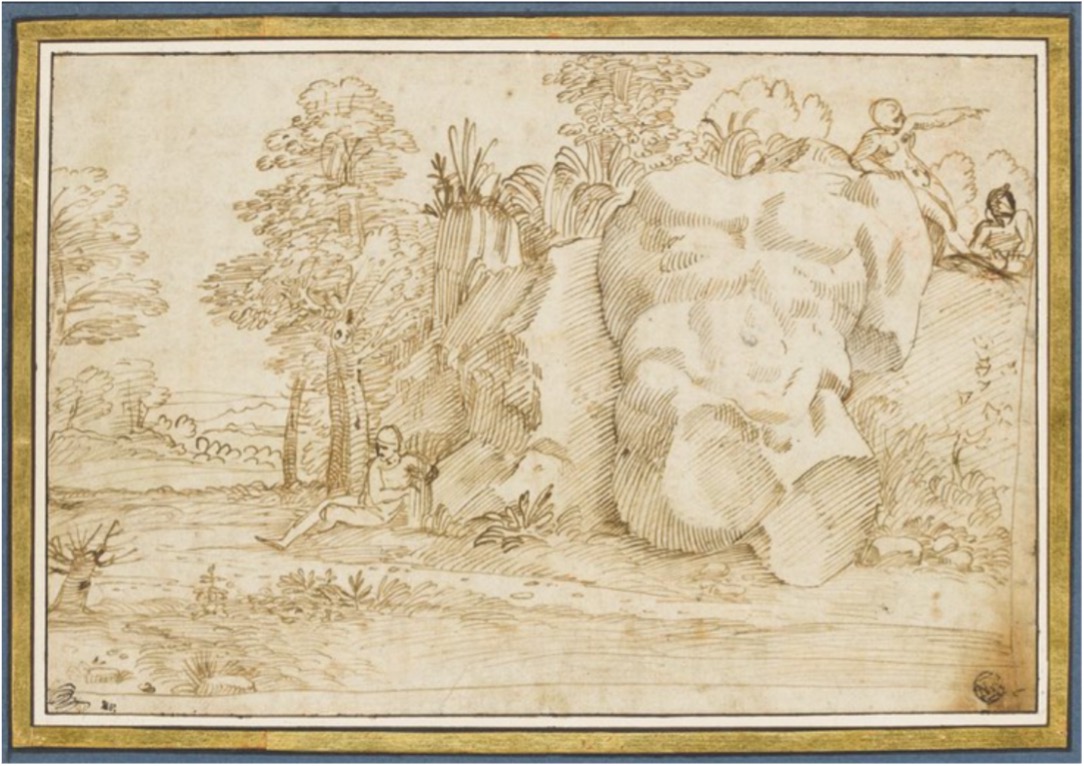
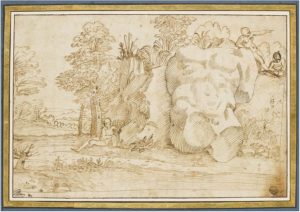 Appel à communications : « Renaissances du colosse. Statues hors norme, émulation et démesure à Rome et dans l’Italie moderne (XVe-XVIIIe siècles) » (Paris, 3 décembre 2026) Appel à communications : « Renaissances du colosse. Statues hors norme, émulation et démesure à Rome et dans l’Italie moderne (XVe-XVIIIe siècles) » (Paris, 3 décembre 2026)
Journée d’études (Paris, INHA, Centre André-Chastel, 3 décembre 2026)
En 1588, dans son ouvrage intitulé Delle cause della grandezza delle città, Giovanni Botero évoque Rome et Venise comme étant les deux villes d’Europe les plus fréquentées pour les plaisirs qu’elles offrent, Rome « emplissant les âmes de stupeur et de plaisir […] par la grandeur de ses aqueducs, de ses thermes, de ses colosses […] ». Au même titre que les . . . → En lire plus
Posté par Bérangère Poulain, le 16 mai 2026;
- date limite des propositions : 31 mai 2026
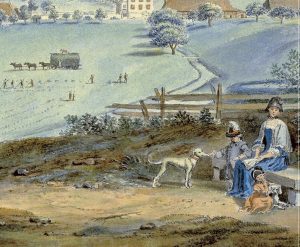
Appel à communication : « Les animaux des Lumières suisses. Discours – représentations – interactions », colloque de la Société Suisse pour l’Étude du XVIIIe Siècle (SSEDS), Université de Berne, du 15 au 17 avril 2027
Organisé par Prof. Dr Valérie Kobi (Université de Neuchâtel), Prof. Dr Hubert Steinke (Université de Berne), Prof. Dr Nathalie Vuillemin (Université de Neuchâtel) et Prof. Dr Nadir Weber (Université de Berne)
Appel à communications
Dans l’histoire des relations entre les hommes et les animaux, le XVIIIe siècle apparaît comme une période de contradictions. D’une part, des naturalistes, philosophes et écrivains ont pensé toujours plus systématiquement la souffrance . . . → En lire plus
Posté par Olivier Bonfait, le 14 mai 2026;
- Date limite : 19 juin 2026
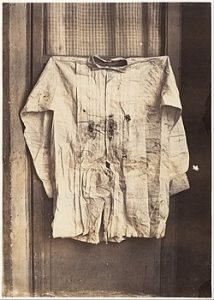 Manet’s Execution of Maximilian (1867-8) and the Visual/Material Culture of Nineteenth-Century Mexico. Manet’s Execution of Maximilian (1867-8) and the Visual/Material Culture of Nineteenth-Century Mexico.
Workshop at the Getty Research Institute (Los Angeles) and the Norton Simon Museum (Pasadena), California, 14-15 jan. 2027
Just as Michel Foucault analyzed Diego Velázquez’s Las Meninas (1656) as a historical “mirror,” offering an age’s image of its own epistemological order, so too, Manet’s Execution of Maximillian (1867-8) offers a mirror of an essential epistemological shift in the way that power was constructed, known, distributed, and experienced in the middle of the nineteenth century. If study of Manet’s Mexican history paintings have continued to center Paris as a center of knowledge, experience, power, and attention, . . . → En lire plus
Posté par Olivier Bonfait, le 14 mai 2026;
- Date limite : 21 juin 2026
Kurt Schwitters, singular plural
In conjunction with the exhibition “Total Schwitters” presented at the Musée national Picasso-Paris from 5 October 2026 to 7 February 2027, the Musée national Picasso-Paris and Université Paris 1 Panthéon-Sorbonne, in collaboration with the Sprengel Museum Hannover, are organizing an international and interdisciplinary conference devoted to the work and legacy of Kurt Schwitters in Paris on 12 and 13 November 2026.
The work of Kurt Schwitters (1887–1948) charts a singular path within the art of the first half of the twentieth century. Painter, assemblage artist, poet, musician, sculptor, typographer, magazine editor, and organizer of artistic events, this total artist – whose work merged seamlessly with life itself – defies categories and resists all attempts at classification. Continuously painting from . . . → En lire plus
Posté par Olivier Bonfait, le 14 mai 2026;
- Date limite : 30 juin 2026
Signes, déchiffrements et récits. Suivre les traces dans les collections du MAMC+
Musée d’art moderne et contemporain de Saint-Étienne Métropole (MAMC+), 9 oct. 2026
Journée d’étude
Dans le sillage de l’exposition « À déchiffrer : Suivre les traces dans les collections du MAMC+ » organisée par le Musée d’art moderne et contemporain de Saint-Étienne Métropole entre le 27 juin 2026 et le 3 janvier 2027, la journée d’étude sera également associée au week-end magnétique dédié à l’exposition, les 10 et 11 octobre 2026. Elle se propose de questionner le musée en tant qu’institution productrice de récits autorisés, participant à la construction de ce qui est rendu visible, reconnu et légitimé, tout en maintenant d’autres formes, pratiques ou subjectivités dans les marges, jusqu’à leur . . . → En lire plus
Posté par Olivier Bonfait, le 14 mai 2026;
- Date limite : 15 juin 2026
The Making of Japanese Art History in the 20th Century September 3-4 (Th. & Fr.), 2026 | CATS, Heidelberg University, Germany
Submission Deadline: 15 June 2026 Acceptance notification by end of June 2026
More than 140 years have passed since European scholars, collectors, and institutions first articulated systematic frameworks for the study of Japanese art. Since then, “Japanese art history” has been produced across multiple sites—universities, museums, exhibitions, and publications—both within Japan and beyond. In recent decades, the “institutional turn” or seidoron in Japanese art history and museum studies has critically reshaped disciplinary self-understanding both in Japanese and English scholarships. “Japan” itself has increasingly been questioned as a stable or sufficient framework for interpreting artistic production and its histories. After the institutional turn, the question is: how has . . . → En lire plus
Posté par Olivier Bonfait, le 14 mai 2026;
- Date limite : 15 juin 2026
The Internationalisation of African Art
Loughborough University, London campus, Oct 15–16, 2026 Deadline: Jun 15, 2026
Organizers: Dr Jonathan Adeyemi (J.*********@******ac.uk) and Dr Kathryn Brown (k.*******@******ac.uk)
We are witnessing unprecedented interest in African modern and contemporary art through surging sales, increased institutional recognition, and the emergence of new collectors. The significant growth of auction sales, art fairs, and biennales is matched by enhanced museum attention to art and artists connected to Africa. This conference explores the epistemic cultures and collecting infrastructures pertaining to African art that are emerging from contemporary market activities. The aim of the conference is to stimulate new academic discourses about African modern and contemporary art and to consolidate the growing academic focus on emerging art markets in the global south. We welcome proposals for 20-minute presentations . . . → En lire plus
Posté par Olivier Bonfait, le 14 mai 2026;
- Date limite : 21 juil. 2026
Time After Time: Art and Feminisms in the ’80s and ’90s
Università di Padova, Oct 15–16, 2026 Deadline: Jun 21, 2026
The international conference Time After Time: Art and Feminisms in the 1980s and 1990s aims to carry out an overview of current research on the relationships between art and feminisms in the 1980s and 1990s and seeks to provide a valuable opportunity for exchange and dialogue among researchers working on these topics. Since the early 2000s, studies on feminisms and gender issues in art history have proliferated in Italy. While the topic has been extensively explored in relation to the 1970s — a period of great momentum for the women’s movement in the West — the 1980s and 1990s have received considerably less scholarly attention. This gap concerns not . . . → En lire plus
|
Équipe Rédacteur en chef : Olivier Bonfait.
Rédacteurs : Elliot Adam (Moyen Age) ; Nicolas Ballet (XX-XXIe siècles) ; Matthieu Fantoni (musées) ; Antonella Fenech Kroke (bourses) ; Vladimir Nestorov (Lettre mensuelle)
Administrateur web : Matthieu Lett.
ancien éditeur : Pascale Dubus
anciens rédacteurs : Gautier Anceau, Sébastien Bontemps, Damien Bril ; Sébastien Chauffour ; Ludovic Jouvet ; Aude Prigot
|

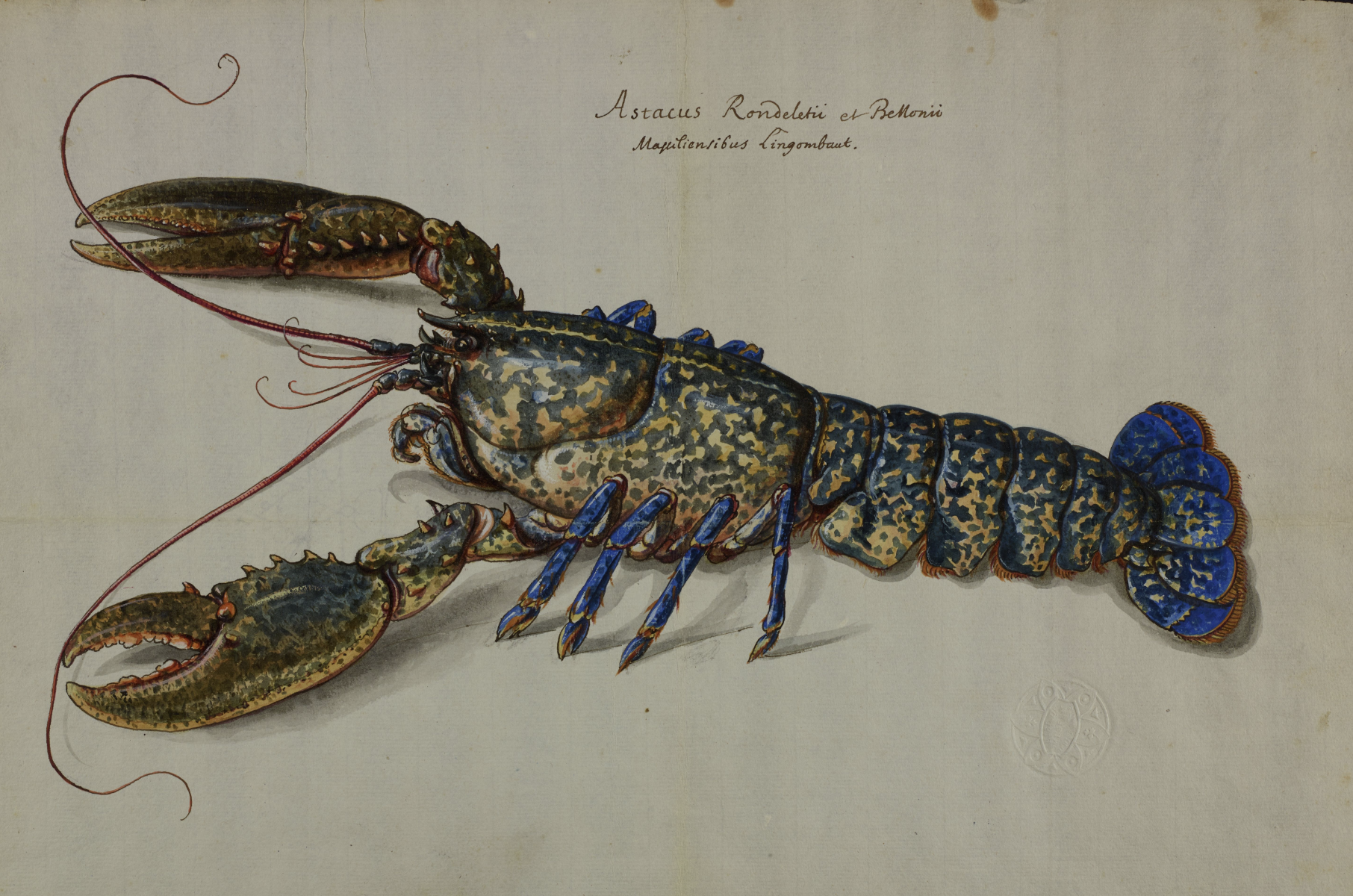 Ces journées d’étude s’inscrivent dans un contexte de célébration de l’histoire naturelle et du vivant alors que la BnF consacre sa saison culturelle 2026/2027 aux Histoires d’animaux et que le Muséum national d’histoire naturelle fête ses 400 ans en 2026. Puissant vecteur de diffusion des avancées scientifiques ou formidable outil de questionnement du monde par l’être humain, l’art sera mis à l’honneur au cours de ces deux journées sur le thème « d’après nature : les artistes et leurs . . . → En lire plus
 Les commentaires sont clos