Posté par Matthieu Lett, le 5 octobre 2026;
- Date limite : 1er décembre 2026
Arpentages numériques
Revue Phantasia, n°17, 2027
Numéro dirigé par Cécile Chatelet et Rémi Mermet
https://popups.uliege.be/0774-7136/
Les propositions d’articles sont à envoyer pour le 1er décembre 2026.
Les articles seront à envoyer pour le 1er juillet 2027 pour une publication prévue en décembre 2027
Technique de mesure  permettant une représentation de l’espace, l’arpentage est le moyen d’établir des plans topographiques ou, à l’inverse, de poser des repères afin de borner un lieu. Tâche du géomètre, le fait d’arpenter est aussi l’activité du piéton ou du promeneur pratiquant la marche de manière soutenue au . . . → En lire plus
Posté par Institut national du patrimoine, le 5 octobre 2026;
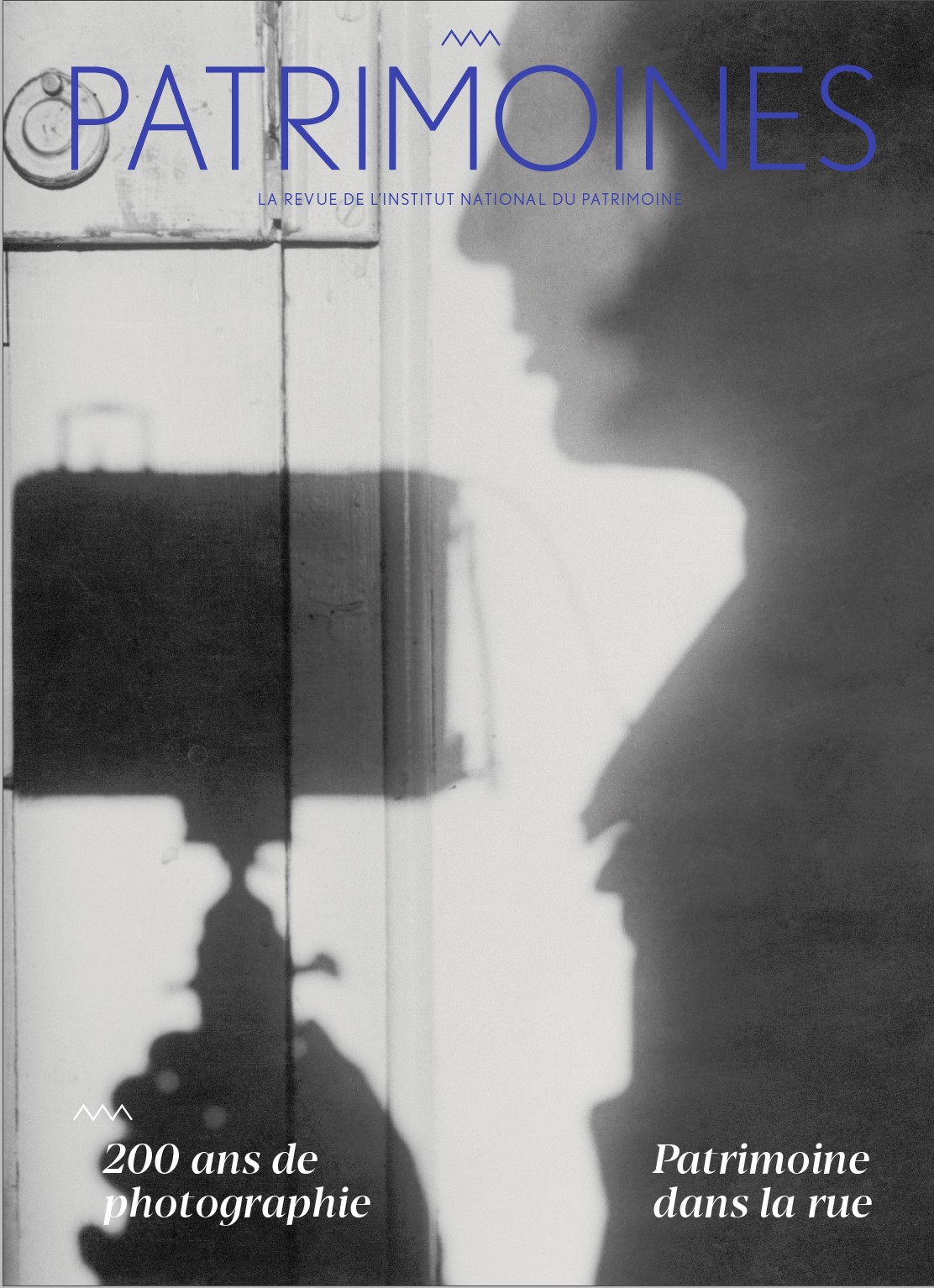
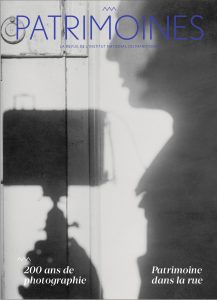 S’inscrivant parmi les célébrations du bicentenaire de l’invention de la photographie, ce numéro de la revue Patrimoines de l’Institut national du patrimoine retrace l’histoire de la patrimonialisation de la photographie en France, au sein de laquelle l’INP a joué un rôle pionnier. Cette livraison s’intéresse par ailleurs aux problématiques de conservation-restauration et de médiation soulevées par les patrimoines exposés dans l’espace public (monuments historiques, œuvres contemporaines, peintures murales, art urbain, etc.). S’inscrivant parmi les célébrations du bicentenaire de l’invention de la photographie, ce numéro de la revue Patrimoines de l’Institut national du patrimoine retrace l’histoire de la patrimonialisation de la photographie en France, au sein de laquelle l’INP a joué un rôle pionnier. Cette livraison s’intéresse par ailleurs aux problématiques de conservation-restauration et de médiation soulevées par les patrimoines exposés dans l’espace public (monuments historiques, œuvres contemporaines, peintures murales, art urbain, etc.).
200 ANS DE PHOTOGRAPHIE
Support de notre mémoire visuelle, archive du passé, objet artistique et technique, poétique ou politique, la . . . → En lire plus
Posté par patrizia.celli, le 1 octobre 2026;
- Date limite : 16 nov .2026
STAGE AU DÉPARTEMENT D’HISTOIRE DE L’ART DE L’ACADEMIE DE FRANCE À ROME – VILLA MÉDICIS
Fondée en 1666 par Louis XIV, l’Académie de France à Rome – Villa Médicis est un établissement français installé depuis 1803 à la Villa Médicis, villa du XVIe siècle entourée d’un parc de sept hectares et située sur le mont Pincio, au cœur de Rome.
Établissement public national relevant du ministère de la Culture, l’Académie de France à Rome – Villa Médicis remplit aujourd’hui trois missions qui se complètent: accueillir des artistes, créateurs et créatrices, historiens et historiennes de l’art de haut niveau en résidence pour des séjours longs d’une durée d’un an ou des séjours plus courts ; mettre en place une programmation culturelle et artistique qui intègre tous les champs des arts et . . . → En lire plus
Posté par Olivier Bonfait, le 1 octobre 2026;
- Date limite : 15 oct. 2026
 FELLOWSHIPS AT THE CLARK FELLOWSHIPS AT THE CLARK
SEMESTER FELLOWSHIPs – Fall (September–december) or spring (february–mid-june) BEINECKE FELLOWSHIP
The Beinecke Fellowships, endowed by the former chair of the Research and Academic Program Trustee Committee, Frederick W. Beinecke, are awarded to senior scholars.
CARIBBEAN ART AND ITS DIASPORAS FELLOWSHIP
This fellowship supports art historians, artists, critics, and writers who engage with the complexity of critical Caribbean scholarship, art, and visual practices today.
CLARK FELLOWSHIPS
These fellowships are open to scholars working on any aspect of visual art, material culture, art history, and adjacent fields.
FUTURES FELLOWSHIP
This fellowship supports artists with research-based projects who are reimagining the . . . → En lire plus
Posté par Olivier Bonfait, le 1 octobre 2026;
 Assistant Professor of Early Modern European Art and Architectural History in the World The Department of the History of Art and Architecture at Brown University seeks applicants whose scholarship focuses on histories of early modern (ca. 1400s-1700s) European art and architecture in the world. This is a tenure-track assistant professor position. We seek candidates who are grounded in the study of the art and/or architecture of Europe and who, ideally, examine Europe’s relationships and connections with the wider world. The position start date is July 1, 2027. Assistant Professor of Early Modern European Art and Architectural History in the World The Department of the History of Art and Architecture at Brown University seeks applicants whose scholarship focuses on histories of early modern (ca. 1400s-1700s) European art and architecture in the world. This is a tenure-track assistant professor position. We seek candidates who are grounded in the study of the art and/or architecture of Europe and who, ideally, examine Europe’s relationships and connections with the wider world. The position start date is July 1, 2027.
Qualifications: Applicants must have a doctorate in art or architectural history in hand by July 1, 2027. The successful . . . → En lire plus
Posté par Olivier Bonfait, le 1 octobre 2026;
- Date limite : 30 nov. 2026
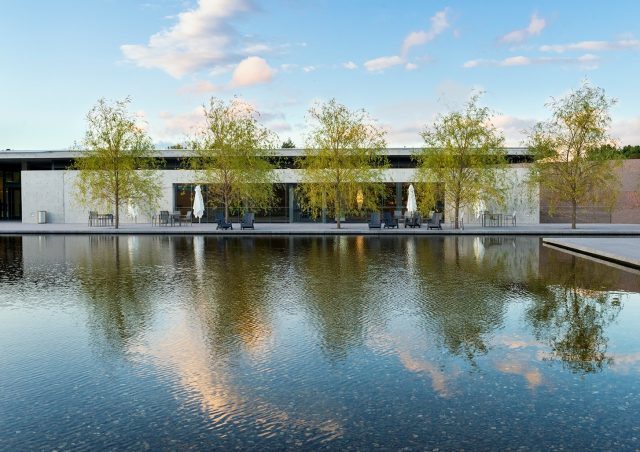
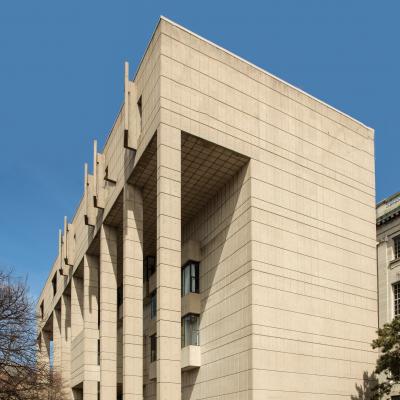
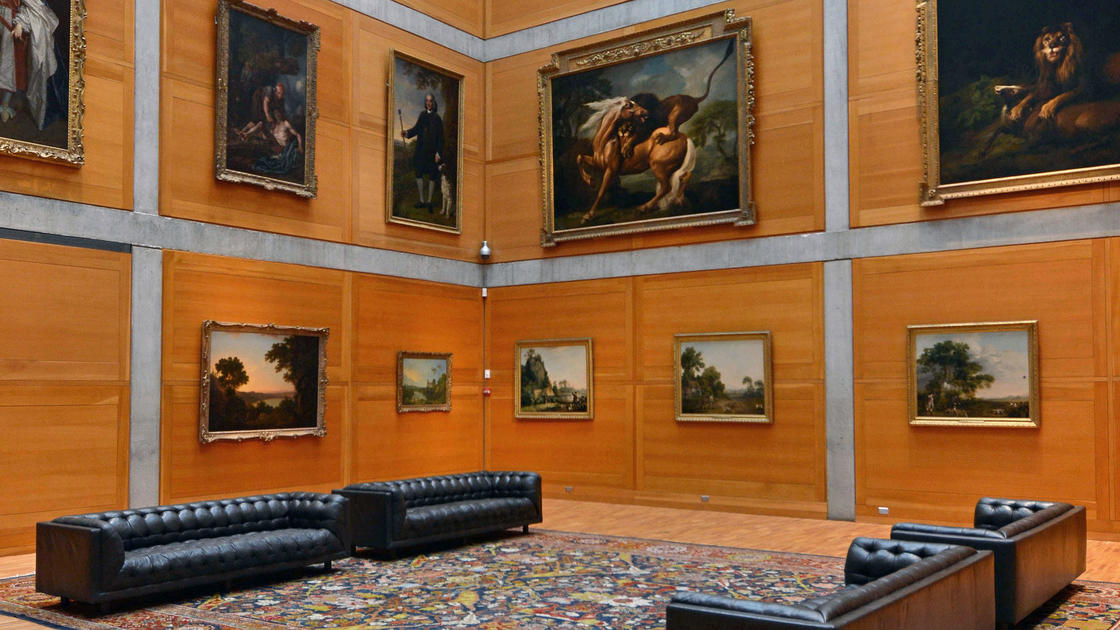
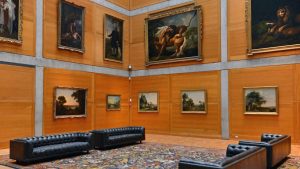 Research Fellowships, Yale Center for British Art Research Fellowships, Yale Center for British Art
Yale Center for British Art, New Haven, CT, USA, Jul 1, 2027–Jun 30, 2028 Application deadline: Nov 30, 2026
The Yale Center for British Art (YCBA) offers short-term fellowships to support research projects that engage substantively with the museum’s collections. These awards are open to academics, curators, doctoral candidates, and independent scholars seeking funding for up to four weeks of on-site research.
Please note that the fellowship program now operates under a stipend model. Fellowships provide US $5,000 for a four-week research period, with funding prorated for stays of two or three full . . . → En lire plus
Posté par Olivier Bonfait, le 1 octobre 2026;
- Date limite : 20 nov. 2026
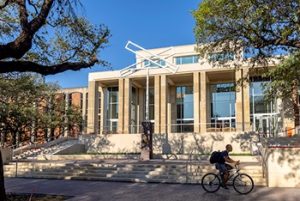 The Department of Art History in the Meadows School of the Arts at Southern Methodist University seeks a scholar and teacher of art and/or visual culture in the long nineteenth century with research/teaching specialization in any geographic/global region. The successful candidate will teach introductory and upper-level undergraduate lecture courses on nineteenth-century topics, as well as lecture courses and undergraduate and graduate seminars in their area of research specialization. This is afull-time tenure-track position with a standard 2-2 course load, and includes advising graduate research at the MA and PhD levels. All faculty in the Department of Art History receive regular research leaves and research/publication support. Salary . . . → En lire plus The Department of Art History in the Meadows School of the Arts at Southern Methodist University seeks a scholar and teacher of art and/or visual culture in the long nineteenth century with research/teaching specialization in any geographic/global region. The successful candidate will teach introductory and upper-level undergraduate lecture courses on nineteenth-century topics, as well as lecture courses and undergraduate and graduate seminars in their area of research specialization. This is afull-time tenure-track position with a standard 2-2 course load, and includes advising graduate research at the MA and PhD levels. All faculty in the Department of Art History receive regular research leaves and research/publication support. Salary . . . → En lire plus
Posté par Olivier Bonfait, le 1 octobre 2026;
- Date limite : 31 oct. 2026
 The Machine Visual Culture research group at the Bibliotheca Hertziana – Max Planck Institute for Art History in Rome is looking for prospective PhD candidates interested in applying to the Max Planck AI + X programme (MP-AIX) and potentially working with Leonardo Impett as a supervisor. The Machine Visual Culture research group at the Bibliotheca Hertziana – Max Planck Institute for Art History in Rome is looking for prospective PhD candidates interested in applying to the Max Planck AI + X programme (MP-AIX) and potentially working with Leonardo Impett as a supervisor.
The MP-AIX programme funds PhD students to work on interdisciplinary research around artificial intelligence, co-supervised across two different Max Planck Institutes. Eligible Max Planck faculty are visible here: https://ai.mpg.de/members
We are interested in ambitious interdisciplinary projects at the intersection of AI with visual culture, art history, image theory, critical AI studies, or visual digital humanities. We are looking for . . . → En lire plus
Posté par Olivier Bonfait, le 1 octobre 2026;
- Date limite : 30 nov. 2026
The Graduate Institute of Art History of National Taiwan University invites applications for an open rank faculty position (Assistant, Associate, or Full Professor) to begin on August 1, 2027.
We welcome applications from any scholars who can enhance and broaden the existing research profile of the institute, but are particularly interested in specialists in the History of Asian Art. Applicants must hold a Ph.D. degree in art history or related fields. Chinese proficiency is preferred but not mandatory. Responsibilities will include teaching at undergraduate and graduate levels, thesis supervision, student advising, and administrative/committee services.
Submissions must be postmarked by November 30, 2026. The application package should include the following:
1.Application form (Please download from our website) 2.Curriculum vitae 3.List of publications 4.Copy of Ph.D. diploma (or a formal . . . → En lire plus
Posté par Olivier Bonfait, le 1 octobre 2026;
- Date limite : 20 déc. 2026
Off the Front. European Artists and the Vietnam War (1955–1975).
Rome, Bibliotheca Hertziana – Max Planck Institute for Art History, May 17–18, 2027 Deadline: Dec 20, 2026
This workshop examines how the Vietnam War was interpreted, mediated, and mobilized across a range of European artistic practices that reflected critically on the geopolitical alignments the conflict brought into view.
The years between 1955 and 1975, from the aftermath of the First Indochina War to the fall of Saigon, coincide with some of the most radical transformations in European art and visual culture. If this period witnessed a profound shift in the very status of the artwork, the Vietnam War offers a prism through which to examine how emerging artistic practices negotiated the demands of political engagement, the circulation of . . . → En lire plus
Posté par Olivier Bonfait, le 1 octobre 2026;
- Date limite : 15 nov. 2026
38th International Seminar on Architectural History | Baths, Spas and Health Resorts between the 15th and the 18th Centuries.
CISA Andrea Palladio, Vicenza, May 26–27, 2027 Deadline: Nov 15, 2026
The practice of bathing at different temperatures dates back to the use of natural thermal springs, becoming widespread in Roman times thanks to the development of efficient aqueducts and water-heating systems. In early modern Europe, the ruins of ancient thermal baths served as a testament to a lost culture of the body, while their architecture and function became subjects of study. Innovations in construction and hydraulics, underpinned by advances in medicine, led to the creation of new spaces for specific practices and social rituals of bathing – initially reserved for the few but later extended to the many.
. . . → En lire plus
Posté par Olivier Bonfait, le 1 octobre 2026;
- Date limite : 1er déc. 2026
 Visiting Assistant Professor, Visual Studies of the Early Modern World, New York Visiting Assistant Professor, Visual Studies of the Early Modern World, New York
New York University, Sep 1, 2027–Aug 31, 2029 Application deadline: Dec 1, 2026
The Gallatin School of Individualized Study at New York University (NYU) invites applications for a two-year Visiting Assistant Professor in Visual Studies of the Early Modern World to commence on September 1, 2027. We are seeking a scholar of the visual who can teach undergraduate courses on the early modern world using transregional or transcultural perspectives. We will consider scholars of any part of the world. Successful candidates for this two-year position will present strong evidence of excellence in interdisciplinary teaching . . . → En lire plus
Posté par Olivier Bonfait, le 1 octobre 2026;
- Date limite : 23 nov. 2026
Images, forms, formats: Illustrated Magazines in Circulation (1850-1950)
Université de Lorraine (IDEA) Co-organized with the Université de Picardie Jules Verne (CORPUS)
Université de Lorraine, 34 cours Léopold, 54000 Nancy, Jun 24–25, 2027 Deadline: Nov 23, 2026
Keynotes: Nora Ramtke (Universiteit Ghent) Benoît Tadié (Université de Paris Nanterre)
The rise of the magazine, as a media format (Jancovic, Volmar & Schneider 2020) or as a publishing genre (Beetham 1990), is inextricably tied to that of capitalist modernity, as their conceptual kinship with magasins and department stores attests (e.g., Brake 2001, Harris 2016). Initially organized as lists (Franzel 2025), and soon featuring increasingly lavish illustrations, magazines played a central role in constructing cultural imaginaries around an ever-expanding array of consumer practices and in dissseminating those imaginaries across geographical borders.
This . . . → En lire plus
Posté par Olivier Bonfait, le 1 octobre 2026;
- Date limite : 15 nov. 2026
Extraction and Abstraction: Material, Form, and Ecology in Modern Art.
Universität Basel, eikones – Zentrum für die Theorie und Geschichte des Bildes, Apr 8–09, 2027 Deadline: Nov 15, 2026
The concept of extraction has been gaining significant traction in the humanities over recent years. The extraction of physical raw materials is only one of the possible forms of extractive labor; the generation of data and knowledge can also be understood as a practice of extraction. From an ecological perspective, the term has gained importance particularly since industrialization, pointing toward a redefined relationship between humans and nature. In modern visual art, engaging with practices of material extraction is a central and recurring concern. Landscape depictions are permeated by forms and sites of resource extraction. With the rise of industrialization . . . → En lire plus
Posté par Olivier Bonfait, le 1 octobre 2026;
- Date limite : 5 oct. 2026
Capturing Iridescence in Early Modern Europe (16th-19th century)
Paris, Sorbonne University, Sep 15–17, 2027 Deadline: Oct 5, 2026
“Iridescence” a term evoking Iris, the goddess of the rainbow, was first coined in most European languages in the early 19th century. Its first recorded instances in print point to the English language, via the work of mineralogists and geologists. That the word should have first appeared in the natural sciences comes as no surprise, given that nature has retained a “monopoly on this metallic-like, colored effect” (Parker 2016, 58) until the 21st century, when nanoscience allowed the advent of iridescence-inducing technologies such as pearlescent flakes (Schenk et al. 2013). Our conference will look into the work of artists, scientists & authors as they experimented with iridescence before it was . . . → En lire plus
Posté par Olivier Bonfait, le 1 octobre 2026;
- Date limite : 15 décembre 2026
New Horizons in American Art History
Philadelphia, Pennsylvania, USA, Apr 15–16, 2027 Deadline: Dec 15, 2026
The field of American art history was only just emerging in 1976. The Bicentennial generated a series of ambitious and influential exhibitions, including Philadelphia: Three Centuries of American Art (Philadelphia Museum of Art), Two Centuries of Black American Art (Los Angeles County Museum of Art), Selections of Nineteenth-Century Afro-American Art (The Metropolitan Museum of Art), American Art 1750-1800: Towards Independence (Yale University Art Gallery), and America as Art (National Collection of Fine Arts, now the Smithsonian American Art Museum). These shows and others asserted the vitality of American art, which, as one contemporary New York Times critic remarked, had previously been “widely condescended to in high places and often relegated to the . . . → En lire plus
Posté par Olivier Bonfait, le 1 octobre 2026;
- Date limite : 16 nov. 2026
History of Art x History of Science: Disciplinary Encounters, Tensions, and Transformations.
University of Lausanne, May 27–28, 2027 Deadline: Nov 16, 2026
The conference aims to trace the ways in which the disciplines of art history and the history of science have observed and influenced one another from the eighteenth century to the present day. While the last decades have seen a proliferation of studies devoted to the relationships between art and science (through research on the visual culture of science, epistemic images, the materiality of knowledge production, or the history of technology), the historical and theoretical interactions between the two fields have received surprisingly little attention as an object of inquiry in their own right.
We seek to understand how two disciplines that emerged at different moments and under . . . → En lire plus
Posté par Olivier Bonfait, le 1 octobre 2026;
 Le Département d’histoire de l’art et d’archéologie recherche une personne en histoire de l’art pour assurer 18h de TD de L1 le second semestre en histoire de l’art moderne (période XV-XVIe siècle) sur 12 semaines (4 groupes de TD, 1h30 par groupe) Le Département d’histoire de l’art et d’archéologie recherche une personne en histoire de l’art pour assurer 18h de TD de L1 le second semestre en histoire de l’art moderne (période XV-XVIe siècle) sur 12 semaines (4 groupes de TD, 1h30 par groupe)
Tous les enseignements sont regroupés sur une journée (mais les transports ne sont pas remboursés).
Les conditions de recrutement sont les mêmes que celles des autres institutions de l’enseignement supérieur : être fonctionnaire, ou agent public, ou salarié du secteur privé ou auto-entrepreneur.
Prière d’adresser CV et lettre de candidature (avec indication des sujets de cours possibles pour la L3) à ol*************@*********ne.fr . . . → En lire plus
Posté par Aurélie Petiot, le 1 octobre 2026;
- Lieu et date : Centre allemand d’histoire de l’art à Paris, les 8 et 9 octobre., Centre allemand d’histoire de l’art à Paris, les 8 et 9 octobre., Centre allemand d’histoire de l’art à Paris, les 8 et 9 octobre.
« D’après nature ». Pratique, théorie et limites d’un paradigme artistique
Au terme des deux années consacrées au sujet bi-annuel « Nature » (2024-2026), dirigé par Peter Geimer et Pierre Wat, les boursières du Centre allemand d’histoire de l’art organisent ce colloque international consacré à l’examen du principe artistique « d’après nature ».
L’histoire de l’art occidentale n’a cessé de mesurer sa propre pratique à l’aune d’une formule dont l’évidence apparente masque une profonde instabilité. L’étude du syntagme « d’après nature » suppose un modèle, une fidélité, une distance, mais chacun de ces termes se dérobe dès qu’on l’examine de près. Prendre la nature pour modèle engage en effet une question que les traités artistiques européens ont continuellement reformulée . . . → En lire plus
Posté par direction études et recherche INHA, le 1 octobre 2026;
- Date et lieu de la conférence : 5 octobre 2026, Paris
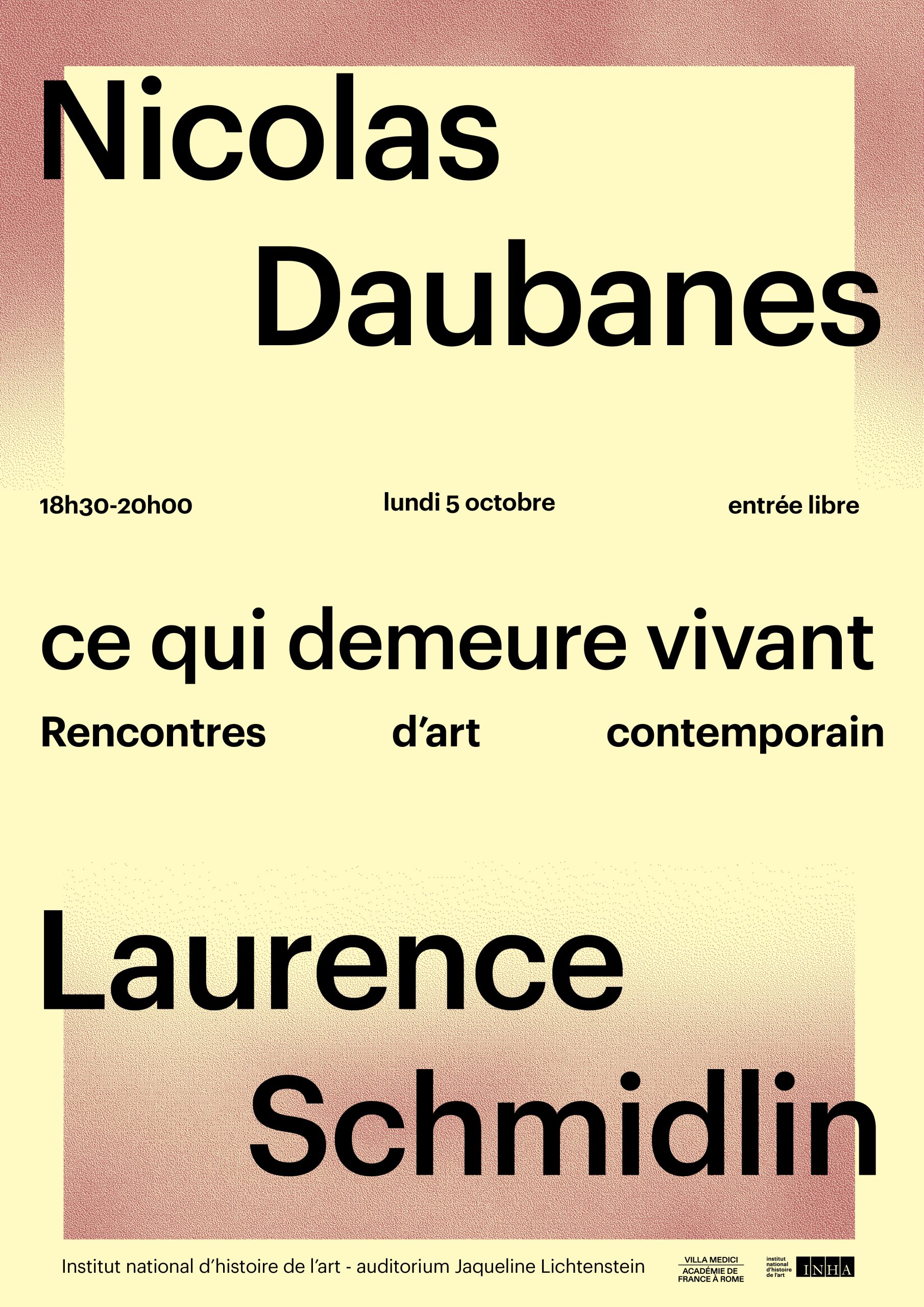
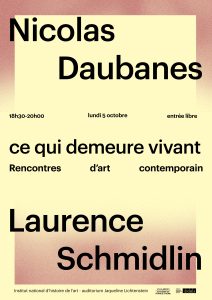 Conférence : Dialogue entre Nicolas Daubanes et Laurence Schmidlin, cycle Ce qui demeure vivant. Rencontres d’art contemporain (Paris, INHA, 5 octobre 2026) Conférence : Dialogue entre Nicolas Daubanes et Laurence Schmidlin, cycle Ce qui demeure vivant. Rencontres d’art contemporain (Paris, INHA, 5 octobre 2026)
Pour la première rencontre du cycle Ce qui demeure vivant. Rencontres d’art contemporain, Laurence Schmidlin, directrice du Musée d’art du Valais, dialoguera avec Nicolas Daubanes. Ensemble, ils reviendront sur la pratique de l’artiste, qui recourt à l’univers carcéral comme à une métaphore pour interroger les formes de contrainte et les structures d’exercice du pouvoir, ainsi que les stratégies de liberté, d’opposition et de résistance qu’elles font émerger. La conversation prendra pour point de départ la résidence . . . → En lire plus
|
Équipe Rédacteur en chef : Olivier Bonfait.
Rédacteurs : Elliot Adam (Moyen Age) ; Nicolas Ballet (XX-XXIe siècles) ; Matthieu Fantoni (musées) ; Antonella Fenech Kroke (bourses) ; Vladimir Nestorov (Lettre mensuelle)
Administrateur web : Matthieu Lett.
ancien éditeur : Pascale Dubus
anciens rédacteurs : Gautier Anceau, Sébastien Bontemps, Damien Bril ; Sébastien Chauffour ; Ludovic Jouvet ; Aude Prigot
|
 permettant une représentation de l’espace, l’arpentage est le moyen d’établir des plans topographiques ou, à l’inverse, de poser des repères afin de borner un lieu. Tâche du géomètre, le fait d’arpenter est aussi l’activité du piéton ou du promeneur pratiquant la marche de manière soutenue au . . . → En lire plus
 Les commentaires sont clos